Orchid arrangements can evolve beautifully throughout the year by pairing refined blooms with seasonal flowers, foliage, and natural vessels. The orchid provides a dependable, elegant focal point, while changing companion elements introduce new colors, textures, and atmospheres. Spring displays may combine orchids with delicate bulbs and fresh moss, summer arrangements can emphasize vivid foliage and airy grasses, and autumn pairings benefit from warm-toned leaves, berries, and wood. In this way, a single orchid variety can support both relaxed and formal presentations across every season.
Foundations of Seasonal Orchid Design
Successful floral design begins with practical as well as visual considerations. The orchid variety, bloom color, stem height, and growth habit should guide the scale and shape of the arrangement.
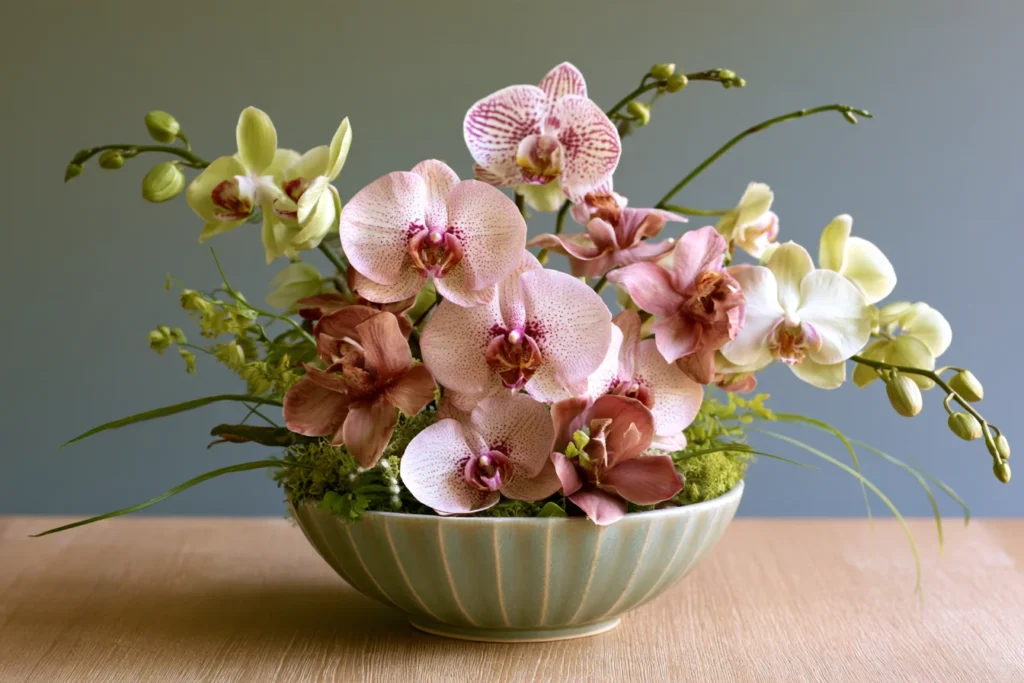
- Scale and Proportion: A substantial container can balance tall Phalaenopsis stems, while a low vessel may better suit compact varieties.
- Color and Texture: Select a dominant seasonal palette, then add contrasting or supporting textures without allowing companion materials to obscure the flowers.
- Container Choice: The vessel deeply affects the mood. Woven vessels suggest informality, glass highlights roots and water, and polished ceramics create a structured, sophisticated appearance.
- Visual Balance: Achieve harmony by ensuring the arrangement has a clear focal area, varied heights, and sufficient open space.
Before assembling the display, determine whether the orchid will remain potted or be used as a cut flower. A living orchid must be paired with compatible plants or decorative materials, never crowded into soil or a vessel that restricts airflow around its roots. Cut stems require clean water and suitable support, while potted plants need drainage and conditions appropriate to their variety. Finish with small accents that reinforce the season, such as moss, seed heads, citrus, or evergreen pieces, maintaining a restrained approach that preserves elegance.
Spring Orchid Arrangements: Orchids and Hydrangeas
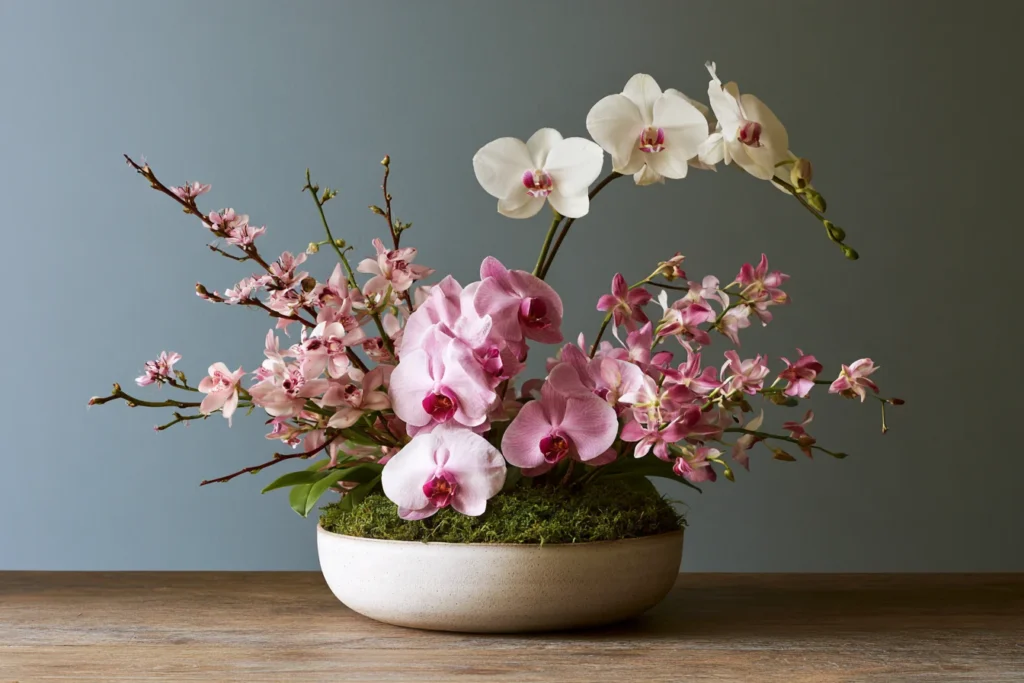
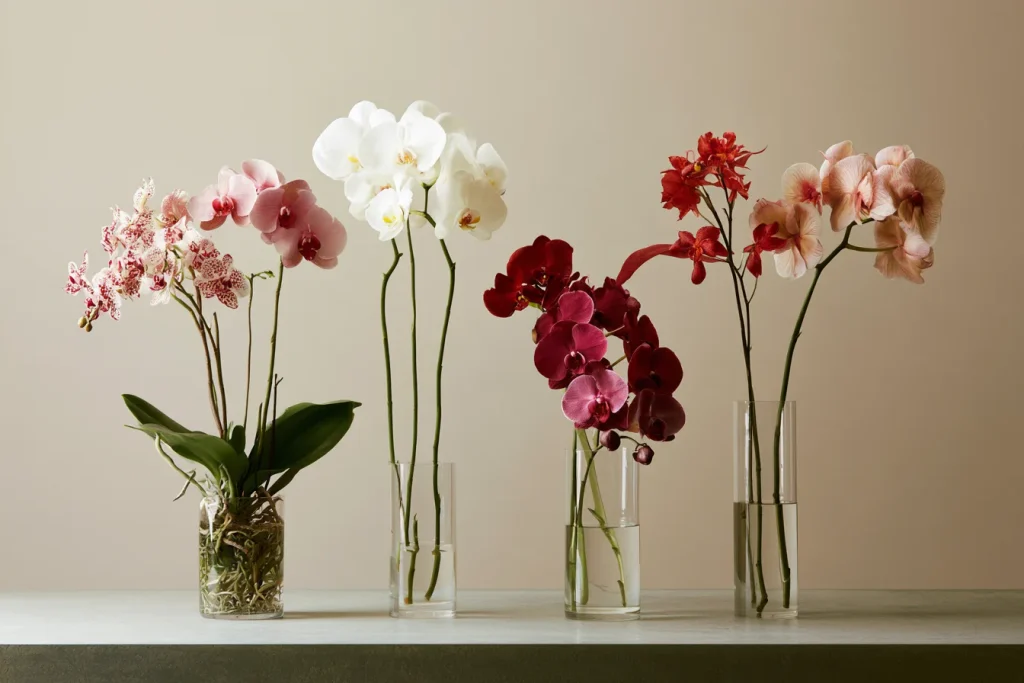
Spring arrangements pair the sculptural elegance of orchids with the generous, garden-like volume of hydrangeas. Together, they create a composition that feels abundant without losing refinement. White, blush, lavender, pale pink, and blue orchids blend naturally with hydrangea clusters in soft spring shades, producing a calm and romantic display. For a more contemporary effect, choose a vivid magenta, coral, or yellow orchid and set it against pastel hydrangeas, allowing the stronger color to become a deliberate accent.
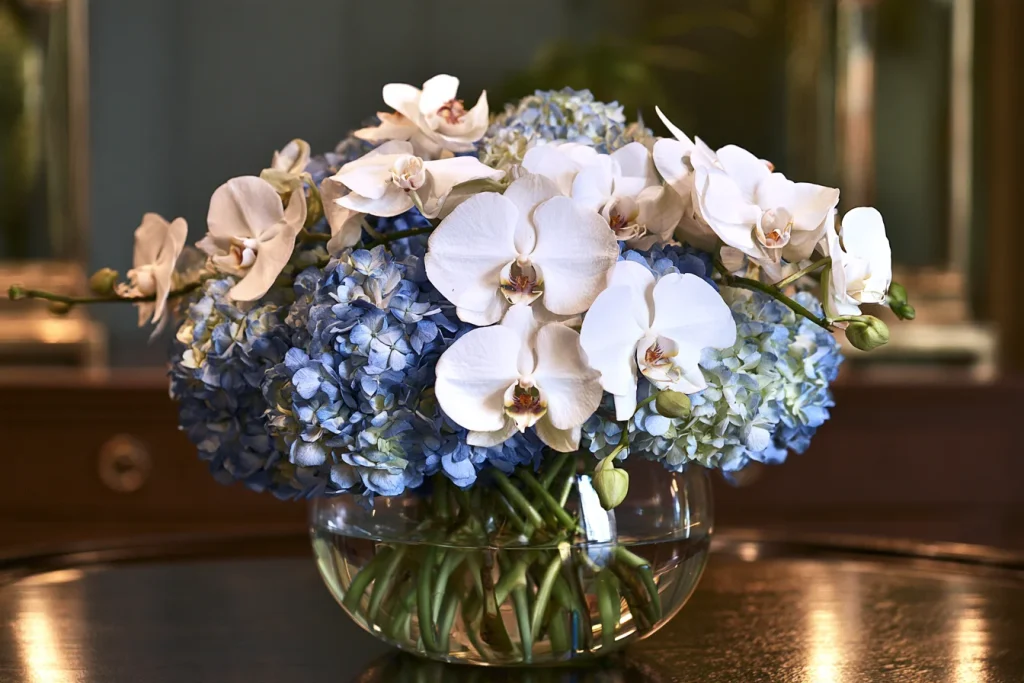
Balance is critical because the flowers have contrasting forms. Orchids provide slender stems, distinctive blooms, and exotic, architectural lines, while hydrangeas form rounded masses. Position one or several orchid stems as the vertical focal point, then use hydrangeas to fill the lower portion or surround the orchids with soft volume. Keep enough open space between the flower forms to preserve their individual character and ensure proper airflow.
For a relaxed spring presentation, place the arrangement in a shallow ceramic bowl, a clear glass vessel, or a vintage-style pitcher. A woven basket can also work when fitted with a watertight liner. Budding branches add height and a sense of seasonal growth, while delicate greenery, moss, and a few small spring bulbs provide texture at the base.
Spring Care Tips: Cut hydrangea stems should remain well hydrated; recut their bases and check the water frequently, as they drink quickly. Keep the display away from radiators, vents, direct heat, and harsh afternoon sun. If using a living orchid, select a container with proper drainage and avoid packing moss or other materials so tightly that airflow is blocked.
Summer Orchid Arrangements: Tropical Elegance
Summer orchid arrangements can evoke the richness of a tropical landscape by combining elegant blooms with generous, sculptural foliage. Monstera leaves, palm fronds, banana leaves, bird-of-paradise leaves, philodendron, caladium, and elephant ear all offer distinctive shapes and textures. Choose foliage according to availability and scale: a compact orchid needs only one or two leaves, while a large arrangement can support several dramatic forms.
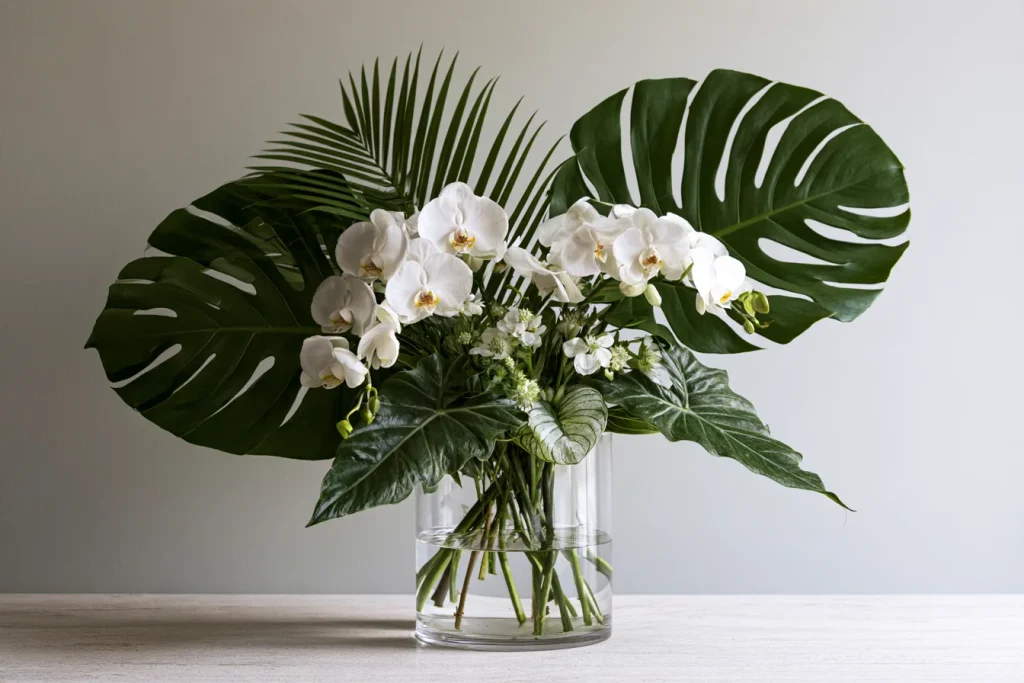
Tropical leaves provide more than a green backdrop. Their broad surfaces frame the flowers, direct the eye, and introduce movement through curved stems and pointed edges. Against deep green foliage, white, yellow, fuchsia, orange, and purple orchid blooms appear especially vivid. For a minimalist display, place one striking leaf beside a single orchid stem in a narrow vessel. For greater impact, layer overlapping leaves behind multiple flower spikes, varying height and direction to create a lush, abundant composition.
Container choice can strengthen the relaxed character of a summer display. Natural wood, stone, rattan, and matte ceramic vessels complement organic foliage, while brightly colored glass adds a playful accent for entertaining. Keep visual density under control by allowing some open space between flower clusters and avoiding too many competing leaf shapes.
Summer Care Tips: Warm weather requires careful maintenance. Keep living orchids and cut materials away from intense afternoon sun, hot windows, and dry air from fans or air-conditioning. Refresh water frequently, wash containers, and never allow stems to stand in stagnant water. A cooler, shaded location will help preserve both blooms and foliage during extended summer displays.
Autumn Orchid Arrangements: Pumpkin Centerpieces
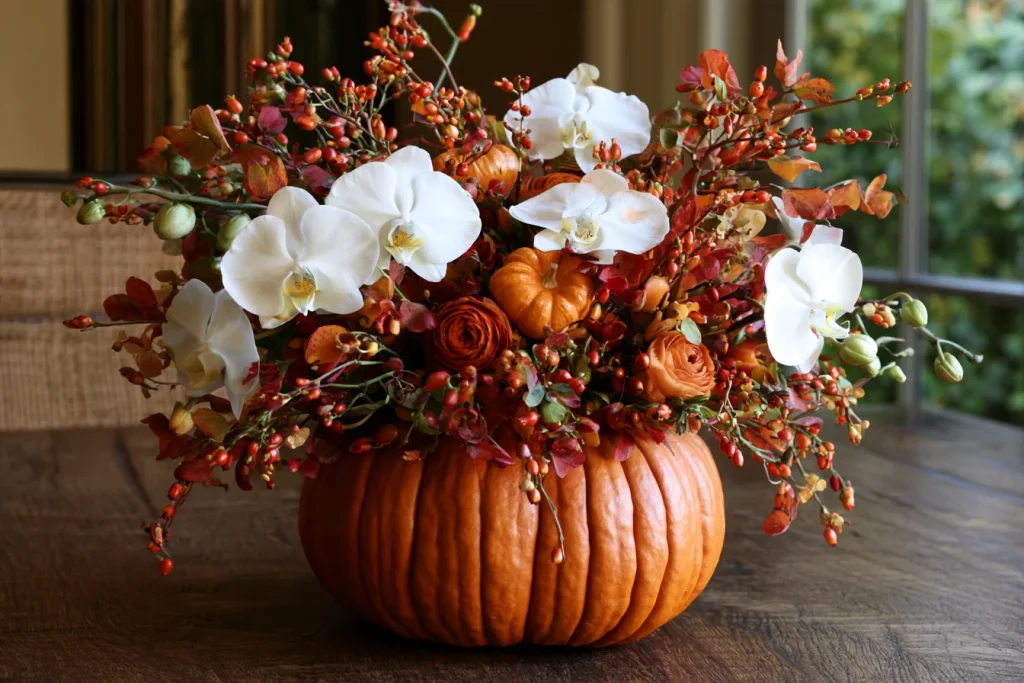
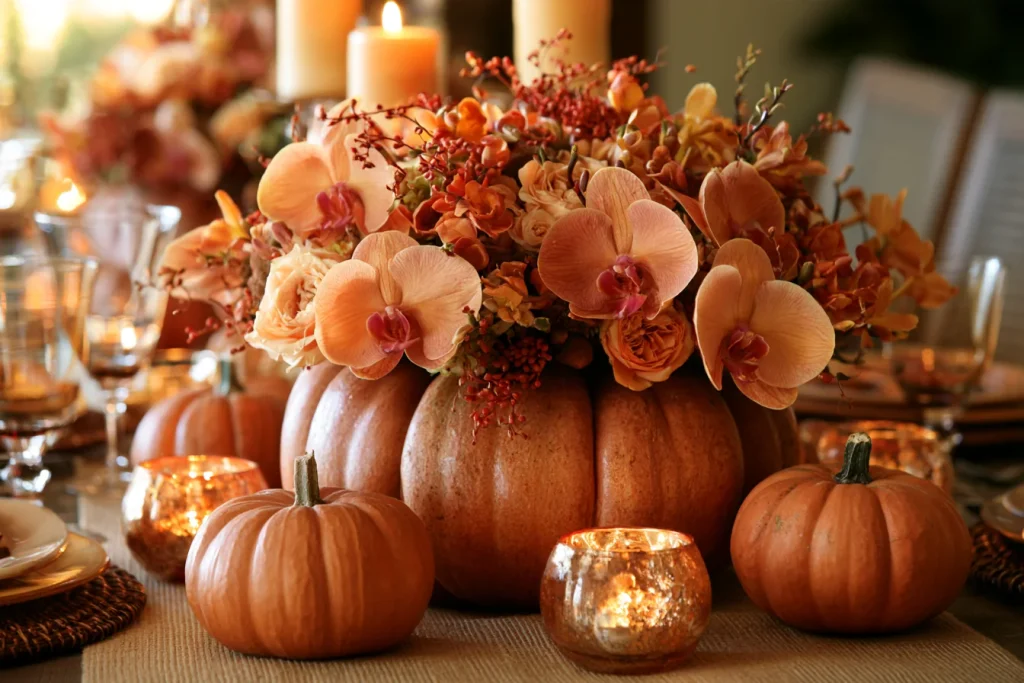
Hollowed-out pumpkins provide an inviting autumn setting for orchids, combining seasonal warmth with the polished character of a carefully designed floral centerpiece. Select a firm, stable pumpkin with an intact surface and a flat enough base to prevent tipping. Classic orange varieties create a cheerful, traditional mood, while creamy white pumpkins offer a quieter, more contemporary backdrop. Green pumpkins feel earthy and understated, and ribbed varieties add texture and visual rhythm. Miniature pumpkins suit intimate tables or grouped displays, whereas larger heirloom forms bring sculptural presence and a rustic, collected character.
Coordinate the pumpkin with orchid colors to shape the arrangement’s atmosphere. Burgundy and deep purple blooms emphasize autumn richness, while copper, golden yellow, and mauve shades create a softly glowing palette. Ivory orchids complement warm pumpkin tones without overwhelming them. White orchids are especially effective against green, burgundy, or dark heirloom pumpkins, where their brightness creates an elegant contrast. Regardless of the combination, allow the orchid to remain the principal feature rather than letting the container dominate.
For safe construction, cut and hollow the pumpkin carefully, removing seeds and excess pulp without weakening its walls. The orchid should remain in its nursery pot whenever possible, or sit inside a waterproof liner that fits securely within the pumpkin. Do not allow water to collect inside the cavity, since trapped moisture quickly encourages decay. Place the finished arrangement on a protective tray to shield furniture from leaks and condensation.
Autumn Care Tips: Use supporting materials sparingly. Eucalyptus, dried grasses, autumn leaves, berries, moss, twigs, and small gourds can reinforce the seasonal theme, but they should frame the orchid rather than conceal its flowers. Check the arrangement regularly for moisture, soft spots, rot, or mold, and remove deteriorating materials promptly. Keep it away from radiators, direct heat, and open flames. If the pumpkin or liner begins to break down, replace it immediately to protect the plant and surrounding surfaces.