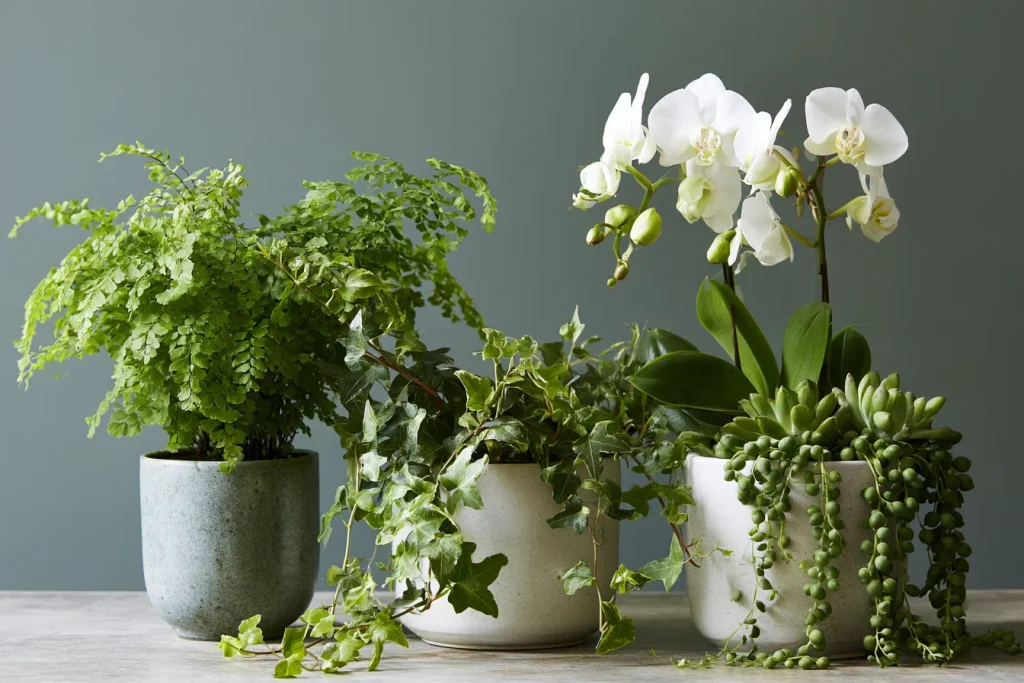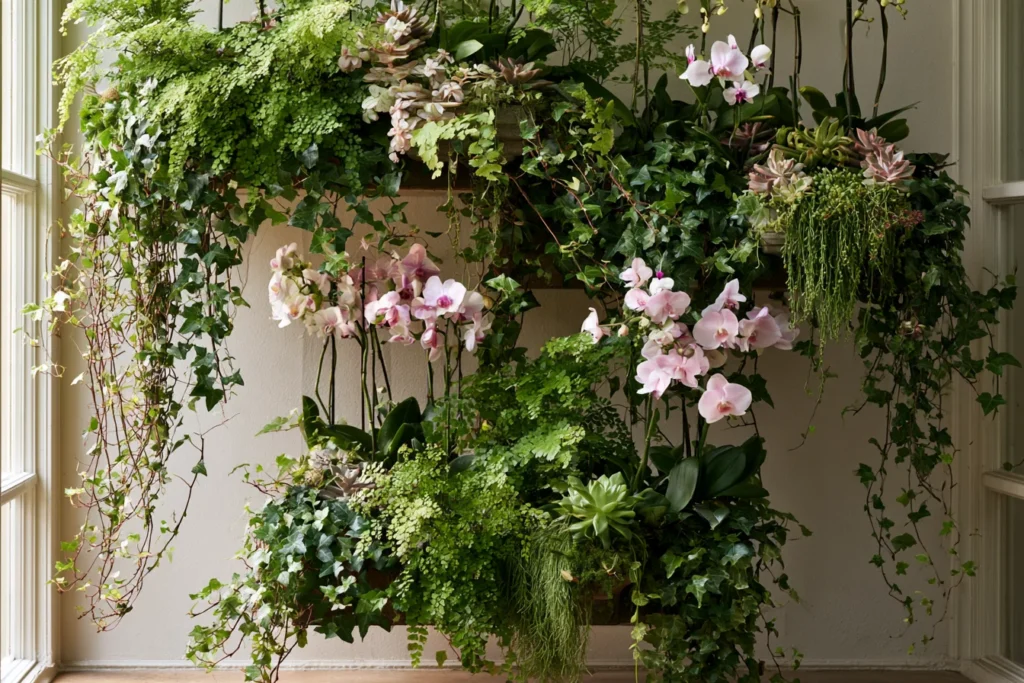
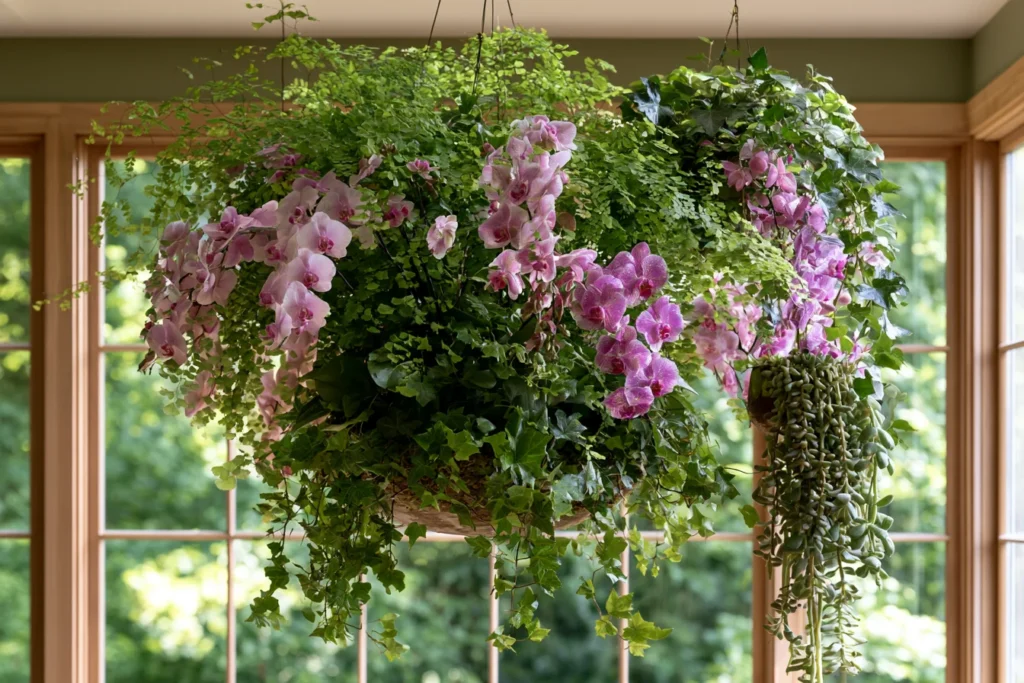
Placing companion plants around the base of an orchid spike can create a layered, naturalistic display while keeping the flowers clearly visible. The orchid should always remain the visual focal point, with surrounding plants forming a low-growing frame rather than a dense enclosure. Leaving open space around the spike and aerial roots ensures the flowers receive attention and the roots remain easy to inspect. This restrained approach adds depth without making the composition appear crowded.
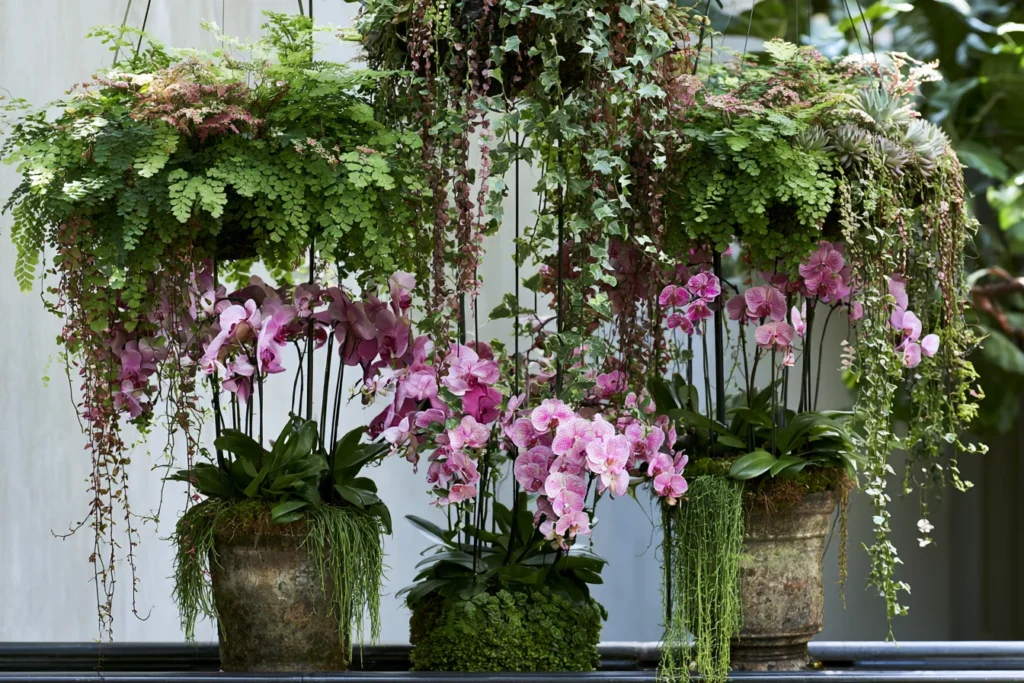
Choosing the Right Companion Plants
When selecting plants to pair with your orchid, choose healthy specimens with firm leaves, active but controlled growth, and no visible pests or disease. The following three options provide excellent contrast in texture and form:
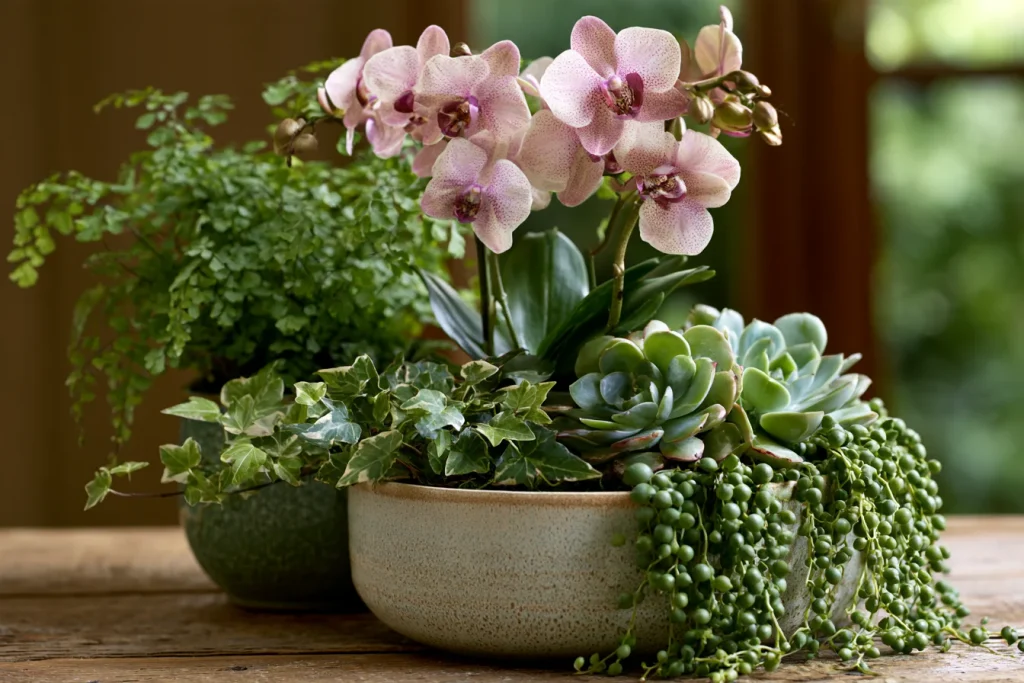
- Maidenhair Ferns: These introduce delicate, feathery foliage and soft volume. Their fine leaves contrast beautifully with the orchid’s broader, more substantial forms, creating a light, woodland-inspired texture near the container surface. They prefer consistently moist conditions, higher humidity, and bright indirect light.
- English Ivy: This plant offers structured, small leaves and graceful trailing lines. It softens the edge of a pot or display vessel and creates a frame that guides the eye toward the upright flower spike. Ivy performs best in bright, indirect light with moderate, consistent moisture.
- Trailing Succulents: Varieties like string-of-pearls, burro’s tail, and trailing sedums provide the strongest architectural contrast. Their fleshy, rounded leaves or clustered stems look distinct from both fern and ivy foliage. They require brighter light, excellent drainage, and a thorough-dry watering cycle.
Essential Design Principles
Scale and direction are critical when combining these plant forms.
- Maintain Proportion: Choose small specimens that complement the orchid rather than matching or exceeding its height.
- Use Color Strategically: Pale or variegated leaves can brighten a dark arrangement, while deeper green foliage provides a calm background for light-colored blooms.
- Direct the Growth: Arrange trailing growth along the container’s sides, keep upright or spreading foliage low, and preserve negative space around the spike.
- Consider the Container: A broad vessel can support several textures, whereas a narrow pot may require only one companion plant to avoid a cluttered look.
The Golden Rule: Use Separate Pots
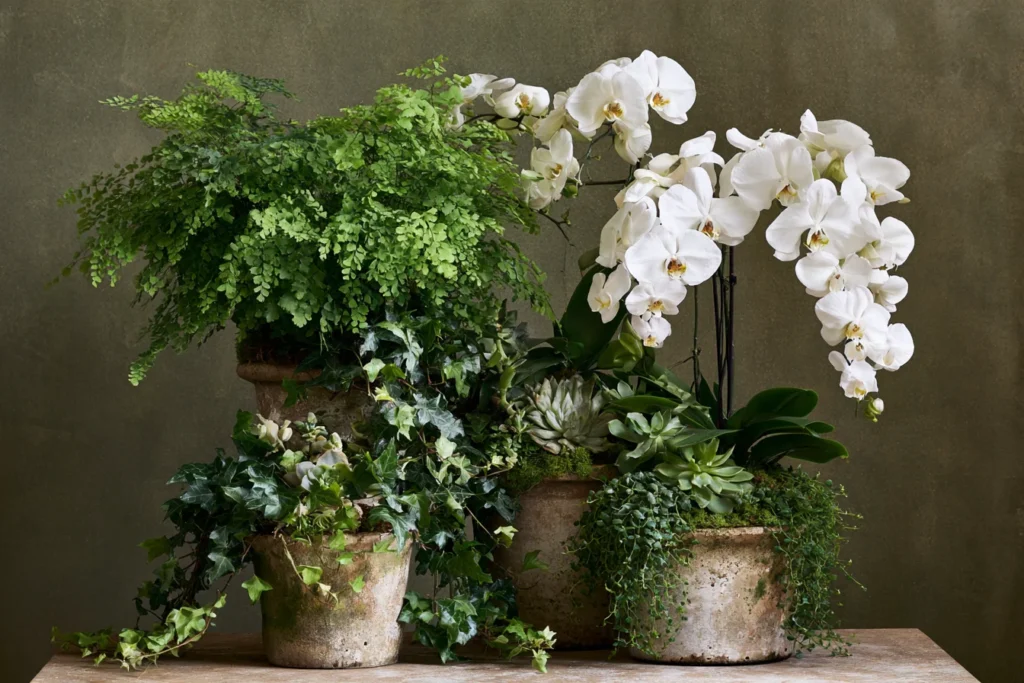
Orchids, ferns, ivy, and succulents have vastly different watering and light requirements. Planting them directly into a shared medium is highly risky.
The most practical solution is to keep each plant in its own removable nursery pot or separate insert, grouped together inside a larger decorative tray or cachepot. This flexible approach allows each plant to be repositioned, pruned, or watered independently without disturbing the orchid’s roots, maintaining the layered appearance while supporting proper long-term care.
Step-by-Step Assembly
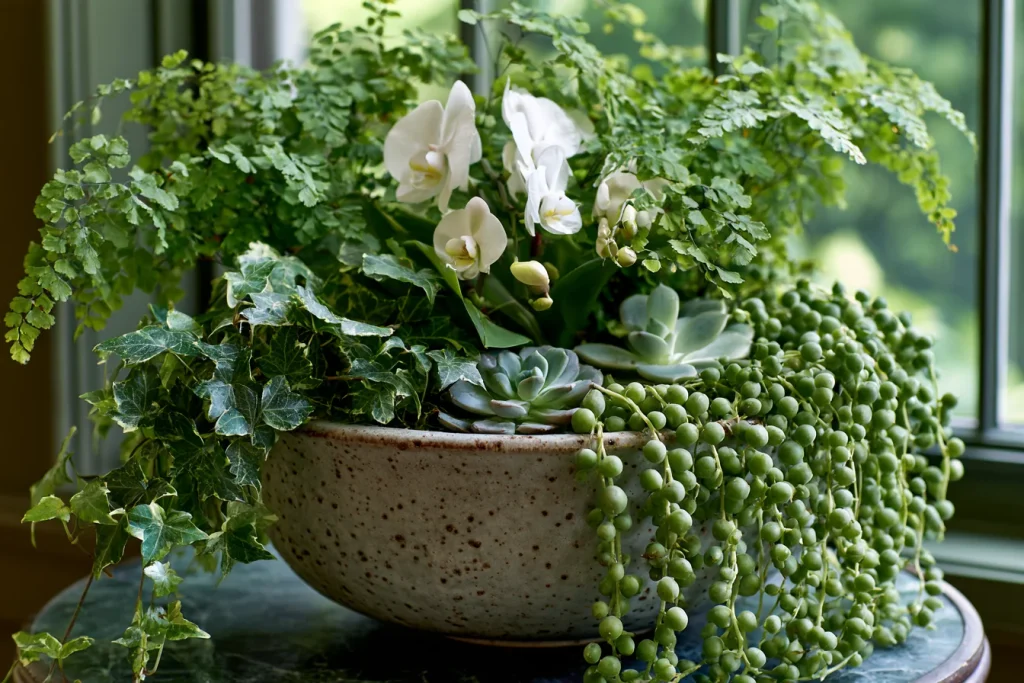
- Select a Suitable Base: Begin with a container, tray, or shallow planter that provides reliable drainage. If using separate nursery pots, choose a waterproof outer tray with enough space for excess water to collect away from the plants.
- Position the Orchid: Place the orchid at the visual center or slightly off-center, depending on the shape of its flower spike and leaves. Keep the plant in its original well-draining medium rather than burying its roots in a shared decorative arrangement.
- Arrange the Companions: Test the height and spread of your chosen plants. Place taller foliage, like a maidenhair fern, behind or beside the orchid. Allow lower plants, like trailing succulents, to soften the edges without obscuring the blooms. View the composition from the front and both sides to ensure the orchid spike remains clearly visible.
- Add Subtle Top Dressing: Decorative moss, bark, or pebbles can create a natural visual transition between the pots. Use them as a shallow top dressing only. Do not pack material tightly around the orchid roots, as this restricts air movement and retains unwanted moisture.
- Test Drainage: Water the arrangement briefly to confirm that drainage is unobstructed and that no plant sits in stagnant water. Leave open spaces between containers so air can circulate freely.
Ongoing Care and Maintenance
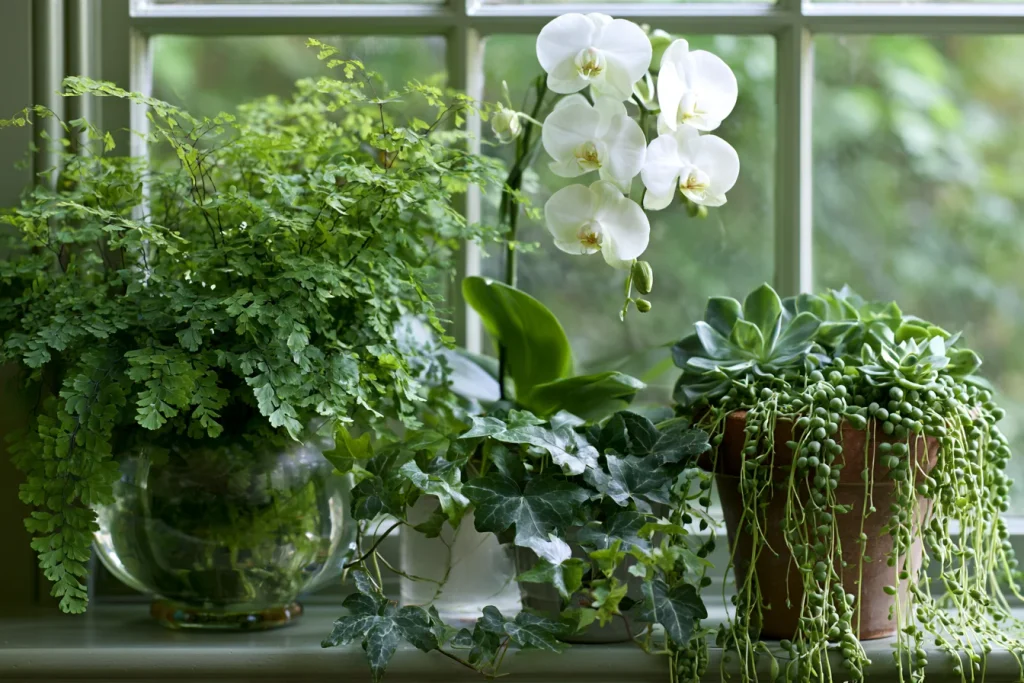
A mixed display requires regular observation rather than constant intervention.
- Water Individually: Water the orchid only when its growing medium is approaching dryness. Check the fern, ivy, and succulents according to their individual moisture needs. Never allow water to pool at the bottom of the decorative vessel or collect in the orchid’s crown.
- Manage Humidity: Maintain suitable ambient humidity without keeping foliage continually damp. Fern foliage should not rest against damp orchid leaves, stems, or flowers, as persistent contact can trap moisture and promote spotting or decay.
- Prune Regularly: Inspect the display weekly. Trim ivy and trailing stems before they cover the orchid or block airflow. Remove browned fern fronds at the base and damaged succulent leaves.
- Rotate for Light: Rotate the arrangement periodically to ensure even light exposure and prevent plants from stretching or leaning.
- Monitor for Issues: Yellowing leaves, soft roots, lingering moisture, stretched succulent growth, or crispy fern fronds indicate that light, watering, drainage, or humidity requires immediate adjustment.
When the orchid finishes flowering, prune or reposition any overgrown companions to preserve open recovery space around the plant. Refresh the moss or top dressing if needed, and feel free to alter the arrangement seasonally, provided you do not compromise the compatible light, airflow, and watering conditions each plant requires.