
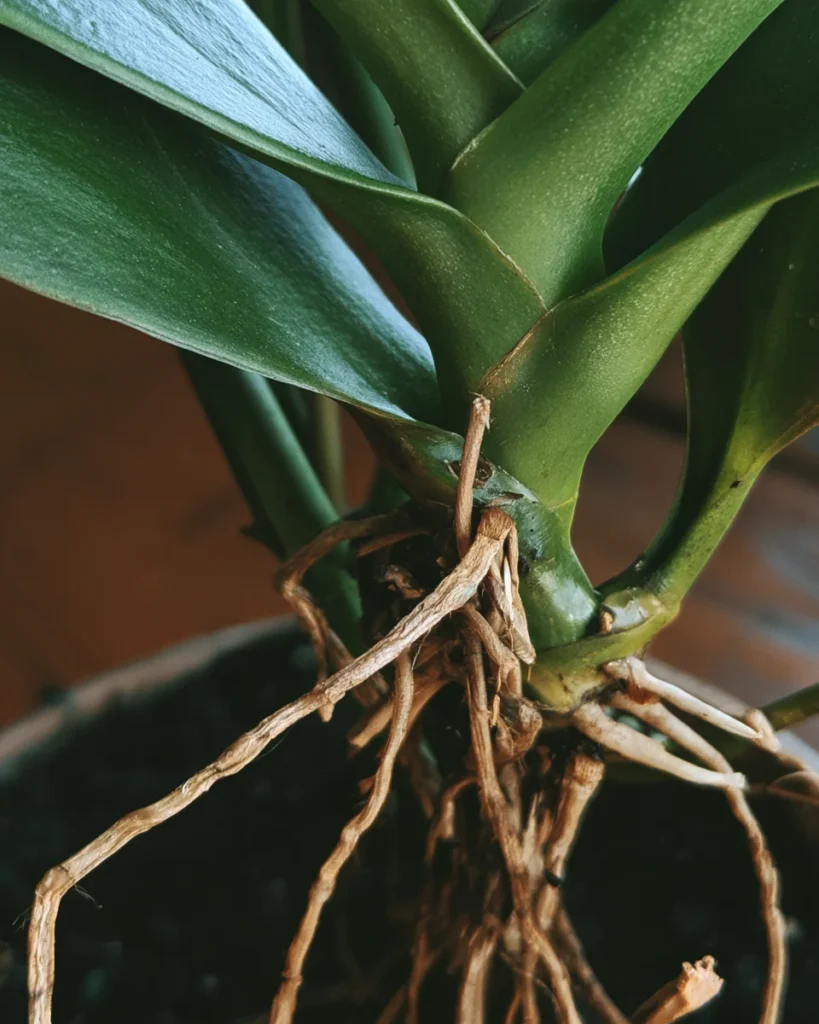
For many orchids, the roots provide a more dependable indication of watering needs than the surface of the potting mix. This is especially true for epiphytic orchids such as Phalaenopsis, which naturally grow attached to trees rather than in dense, continuously moist soil. Their exposed roots are adapted to absorb water quickly when rain, mist, or humidity is available, then dry as air moves around them. Constant wetness prevents this drying period and can reduce oxygen around the roots, increasing the risk of rot and declining plant health.
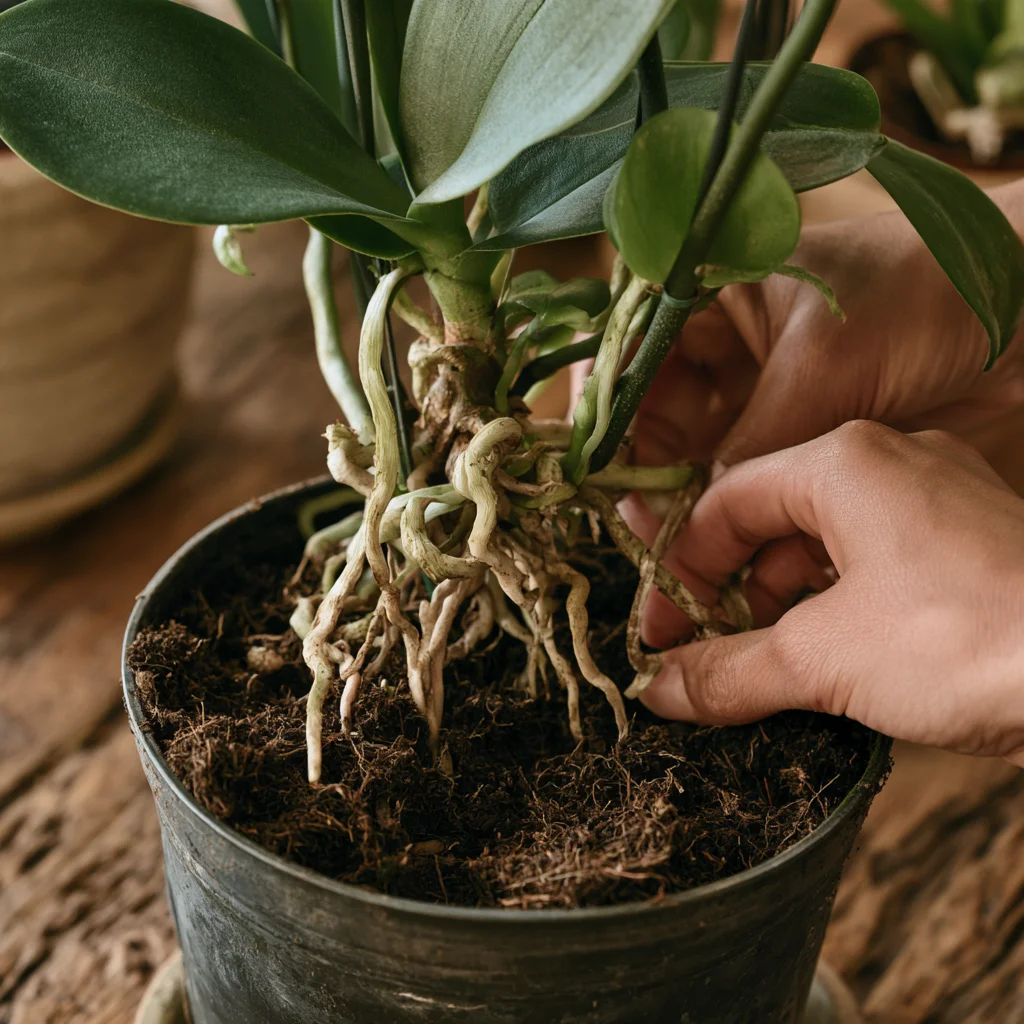
An orchid root is covered by a specialized outer layer called the velamen. When the velamen is dry, it commonly appears silvery-gray, pale, or white. After absorbing water, it becomes translucent, allowing the living tissue beneath to show through as a vibrant green. This visible change makes root observation particularly useful when an orchid is growing in a transparent pot. Generally, predominantly silver roots suggest that watering may be appropriate, while mostly green roots indicate that moisture is still present. Brown, black, mushy, or hollow roots, however, may signal damage rather than a simple need for water.
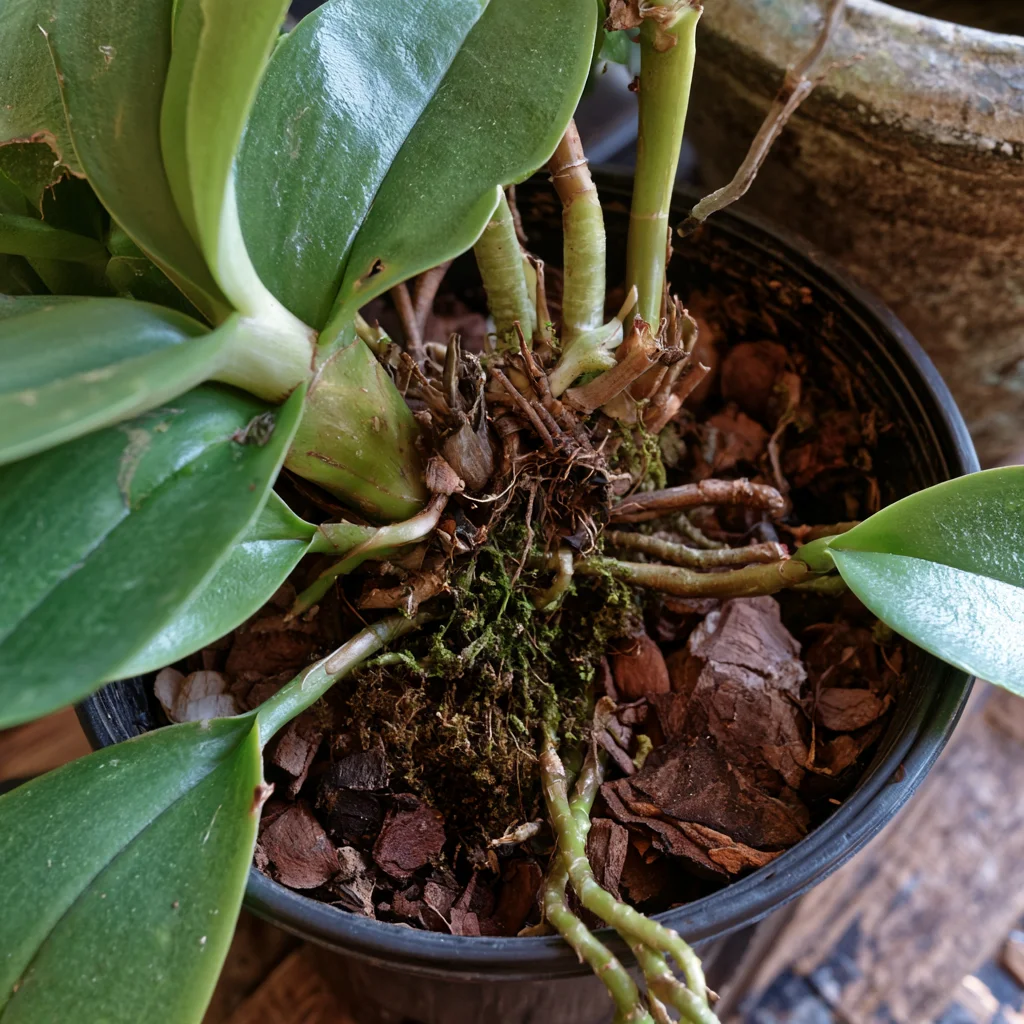
Root color is a valuable guide, but it should not be treated as an isolated rule. Interpret it alongside the orchid’s species, pot material, potting medium, temperature, humidity, airflow, season, and overall condition. A plant in a small plastic pot with fine bark may remain moist longer than one in a ventilated basket filled with coarse bark. Warm, bright, actively growing conditions can also increase water use, while cool or dim conditions usually slow it. Instead of watering on a fixed calendar schedule, check the roots and the container regularly, then respond to their actual moisture status. This approach creates a flexible routine that supports the orchid’s natural cycle of absorbing moisture and drying between waterings.
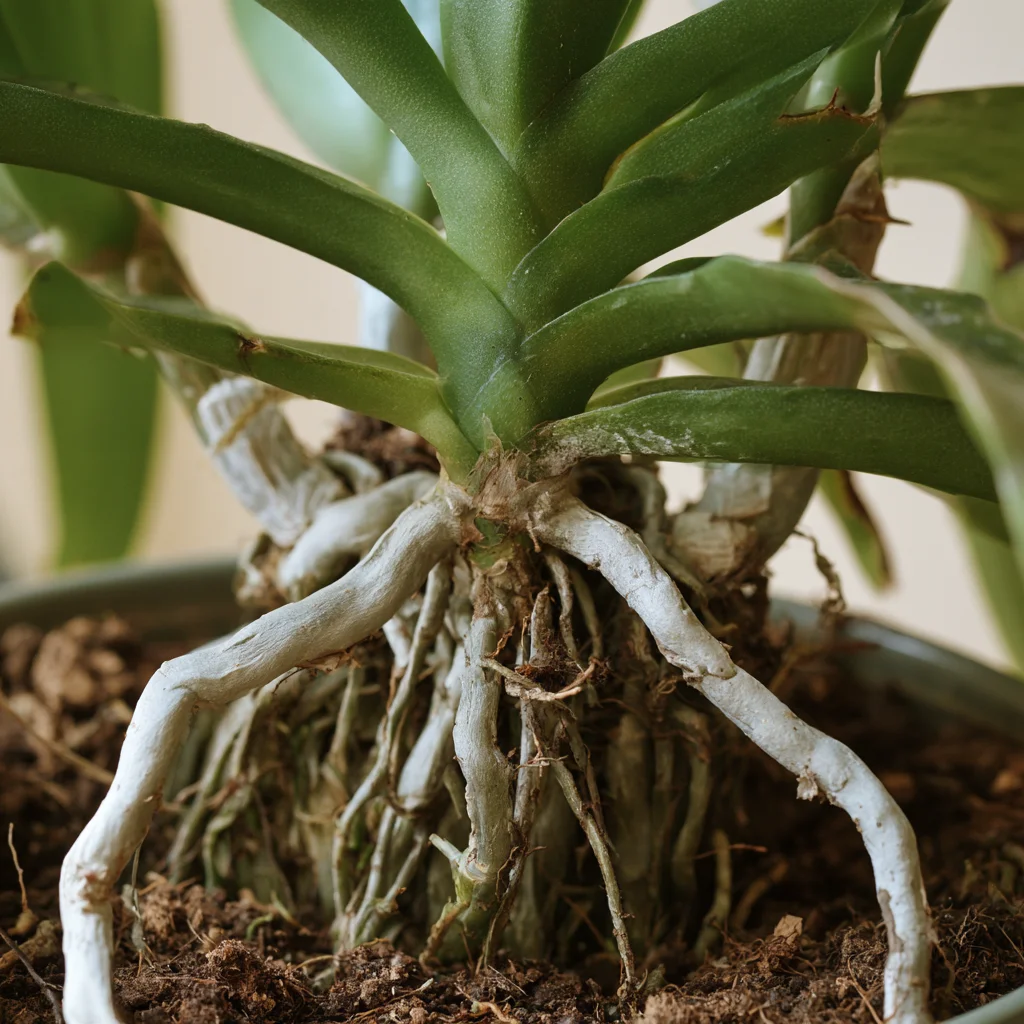
Orchid roots provide useful visual clues about moisture, but their appearance should be interpreted alongside firmness and overall plant condition. Silvery-gray or pale gray roots generally have a dry velamen, the spongy outer layer that absorbs and stores water. When several exposed roots appear this color, the orchid is usually ready to be checked for watering. This does not mean that every gray root requires immediate soaking; the potting medium, container weight, air movement, and recent weather should also be considered.
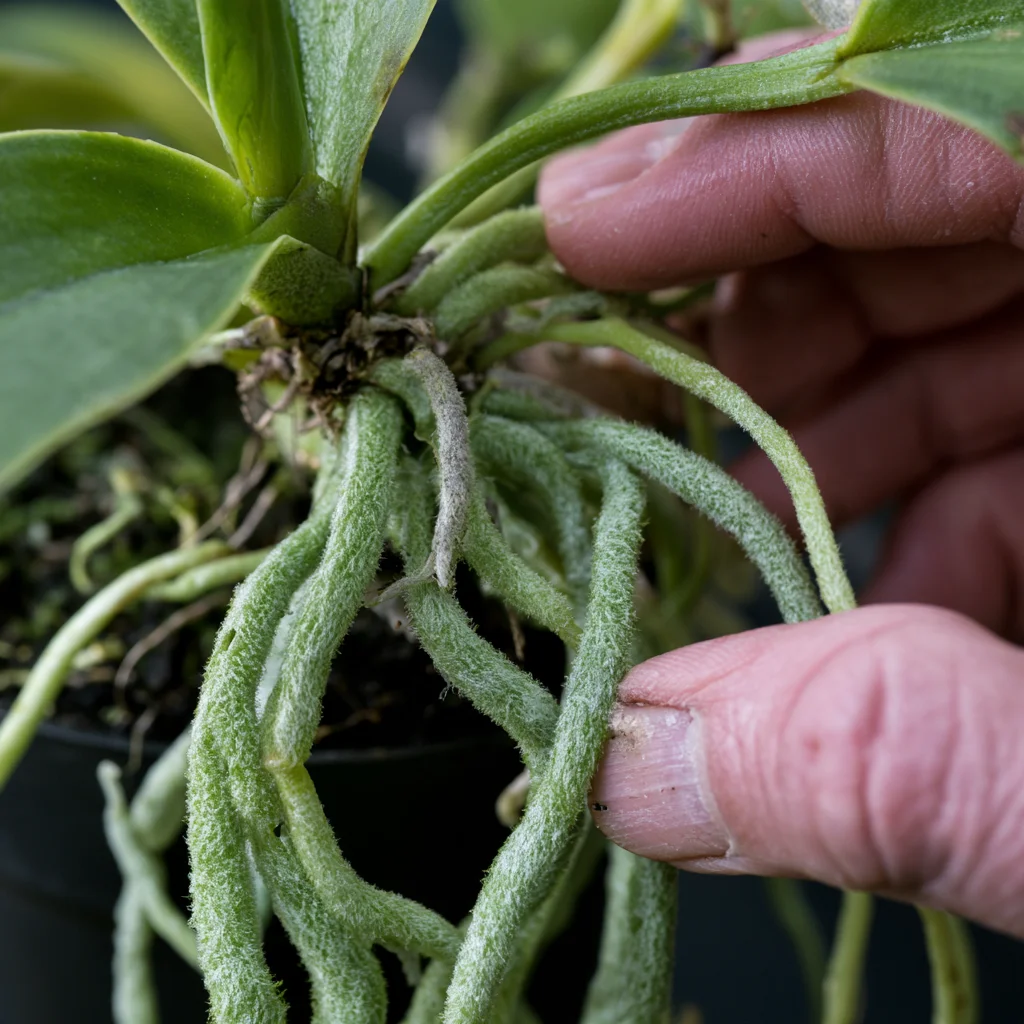
Vibrant green roots normally indicate that the velamen is hydrated. Green roots commonly appear after watering or soaking and usually do not need more water immediately. As moisture levels change, roots may transition from gray to green, while slightly pale, uneven, or mottled coloring can be normal during the drying process. A single root may change color at a different rate from the others, so it is more reliable to examine several visible roots before deciding whether the plant needs water.
Color alone cannot distinguish healthy roots from damaged ones. Healthy roots are generally firm and full, even when their surface is gray or green. Mushy, brown, black, hollow, or collapsed roots may indicate decay, particularly when they have a foul smell or a soft outer layer that slips away when touched. Dry, papery, and severely shriveled roots can instead reflect prolonged dehydration. Damaged roots should be assessed carefully, since minor discoloration does not always mean that removal is necessary.
Several visual conditions can cause confusion. Naturally brown sections may be older tissue rather than active rot, especially if the root remains firm. Green or darkened surfaces may result from algae growing in consistently damp, transparent containers, not from disease. Roots pressed tightly against an opaque pot may also look unusually dark because they receive less light. Inspect roots from multiple sides and compare their texture, color, and condition. Looking for a consistent pattern across several roots provides a more dependable guide than relying on one isolated color patch or a single unusual root.
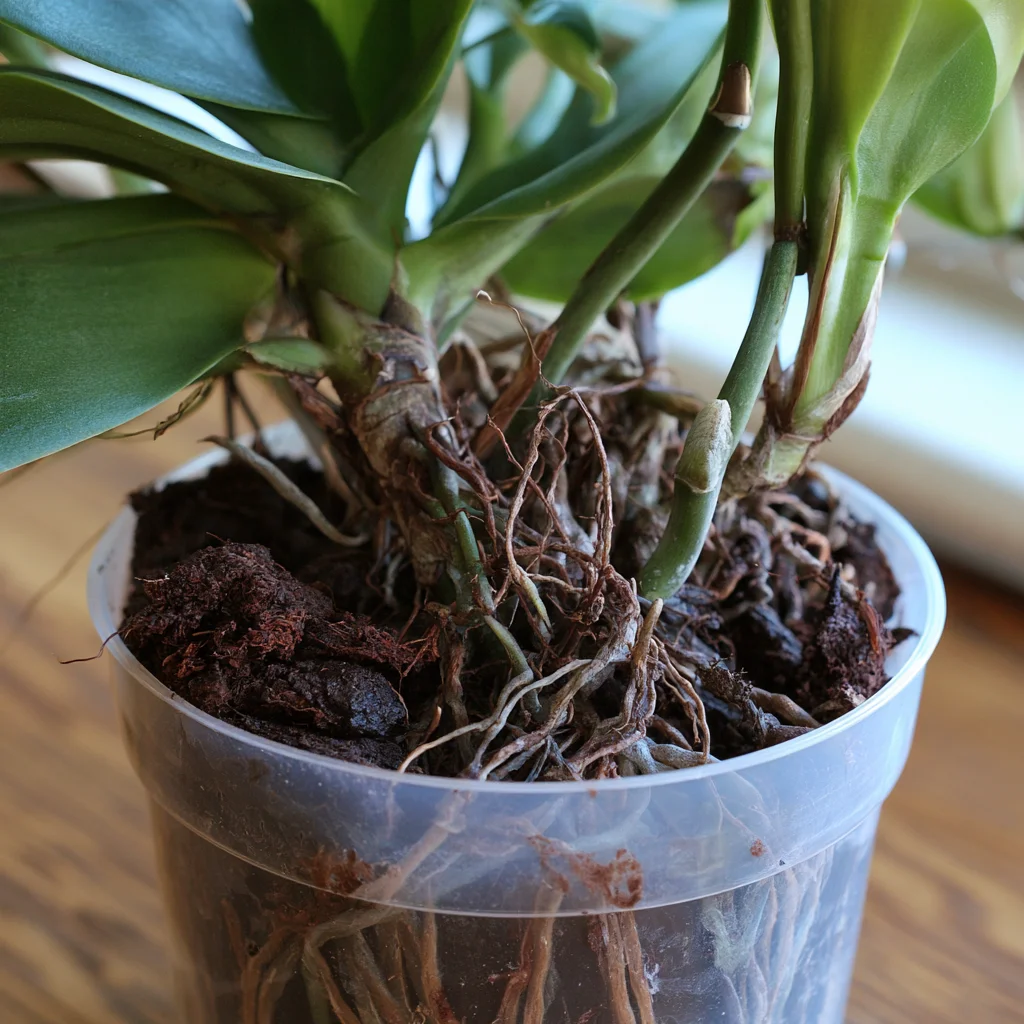
Begin with a visual inspection before moving the orchid or adding water. If it grows in a clear nursery pot, examine the roots through the sides and bottom. Healthy roots may appear green when hydrated or silvery-gray when they have dried. If the container is opaque, look gently through its drainage openings and around the pot’s lower edge. Do not pull the plant out or disturb the root system simply to investigate it.
Next, lift the pot and consider its weight. A recently watered orchid usually feels noticeably heavier, while a dry pot feels light. Inspect the roots in several visible areas rather than relying on one strand. Then check the potting medium at more than one depth. Bark can appear dry and pale on the surface while remaining damp in the center, so avoid judging moisture from the top layer alone. Use a clean wooden skewer or your finger where the pot and roots allow access without causing damage.
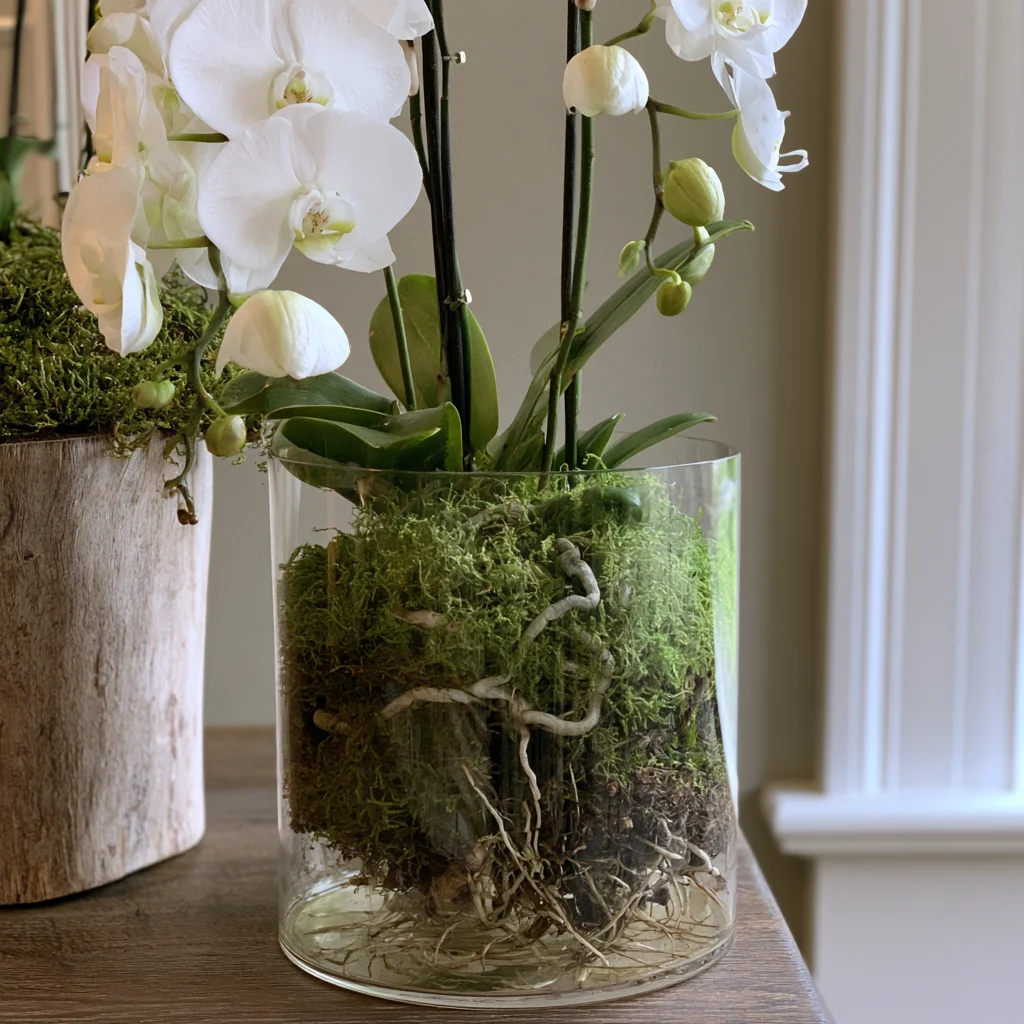
Water when the overall pattern indicates that the plant has dried sufficiently: most visible roots should be silvery-gray, the container should feel relatively light, and the medium should be only slightly moist or dry beneath the surface. Growing conditions also matter. Warm temperatures, bright light, airflow, and active growth can shorten the interval between waterings, whereas cool, dim, or humid conditions can prolong it. These observations are more reliable than following a fixed calendar.
When watering is appropriate, use room-temperature water and saturate the medium evenly until it flows freely from the drainage holes. Allow the pot to drain completely, then empty any saucer or outer container so the orchid never stands in water. Recheck the roots afterward: adequately hydrated roots generally shift from gray to green. If most roots are already green or the medium remains damp, postpone watering and inspect again later. This repeatable root check helps prevent both chronic overwatering and unnecessary dryness.
Root color is a useful watering signal, but it should not become an inflexible rule. In a clear pot, healthy, hydrated orchid roots commonly appear green, while roots that have dried may look silvery-gray. Observe the overall pattern rather than one root or a single moment. Mostly green, firm roots usually indicate that watering can wait, particularly when the growing medium still feels damp. Mostly silvery-gray roots combined with a dry medium generally indicate that the plant should be watered thoroughly, allowing excess water to drain completely.
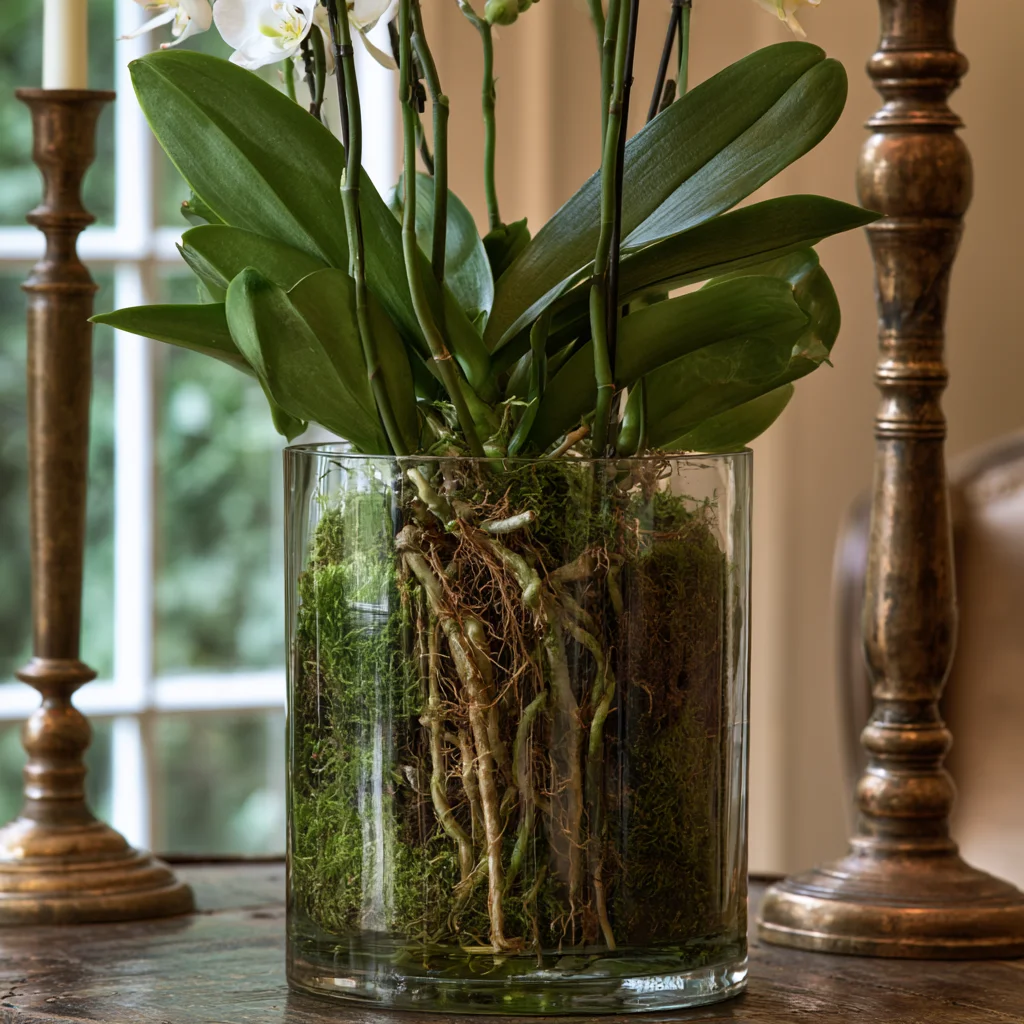
Opaque containers make root observation more difficult, so use additional clues. Lift the pot to compare its weight with that of a freshly watered plant, check whether the medium feels dry near the surface and deeper within the pot, and inspect the drainage holes when possible. Watering frequency changes with conditions: bright light, warm temperatures, active growth, and flowering often increase demand, whereas low light and cool temperatures slow drying. Dry indoor air can shorten intervals, while high humidity can lengthen them. Potting material also matters. Fine moss generally retains moisture longer than coarse bark, so identical root colors do not necessarily mean identical watering schedules. Air movement, pot size, and the amount of root mass further affect drying.
Newly repotted orchids need careful observation because disturbed roots and fresh medium may alter moisture use. Plants that have lost roots should not be watered more often simply because they appear stressed; their reduced root system may absorb less water, increasing the risk of decay. Limp leaves or wrinkled pseudobulbs can indicate dehydration, but they should be assessed alongside root condition and medium dryness. If roots are visibly damaged, correct poor drainage, inadequate airflow, or unsuitable watering habits rather than merely adding more water. A practical decision framework is simple: mostly green, firm roots mean wait; mostly silvery-gray roots with a dry medium mean water thoroughly; damaged roots mean first improve the growing conditions and watering method.