How to Choose the Perfect Vessel for Your Orchid: Style Meets Plant Health
Choosing the right vessel for orchids should begin with the plant’s health, not with appearance alone. An attractive container cannot compensate for poor drainage, restricted airflow, or excess moisture around the roots. Orchids generally need a growing setup that allows water to pass through freely while permitting air to circulate through the root zone. These conditions help reduce the risk of root rot and provide a more stable environment for healthy growth.
The Golden Rules of Orchid Containers
Before focusing on aesthetics, ensure the container meets the biological needs of the plant.
- Drainage and Airflow: Check that the growing pot has drainage holes in its base and, where appropriate, openings along the sides for additional airflow.
- Proper Sizing: The pot should be large enough to accommodate the orchid’s current root mass without leaving a wide excess of unused space. An excessively large container holds moisture for too long, while a pot that is too small can crowd the roots.
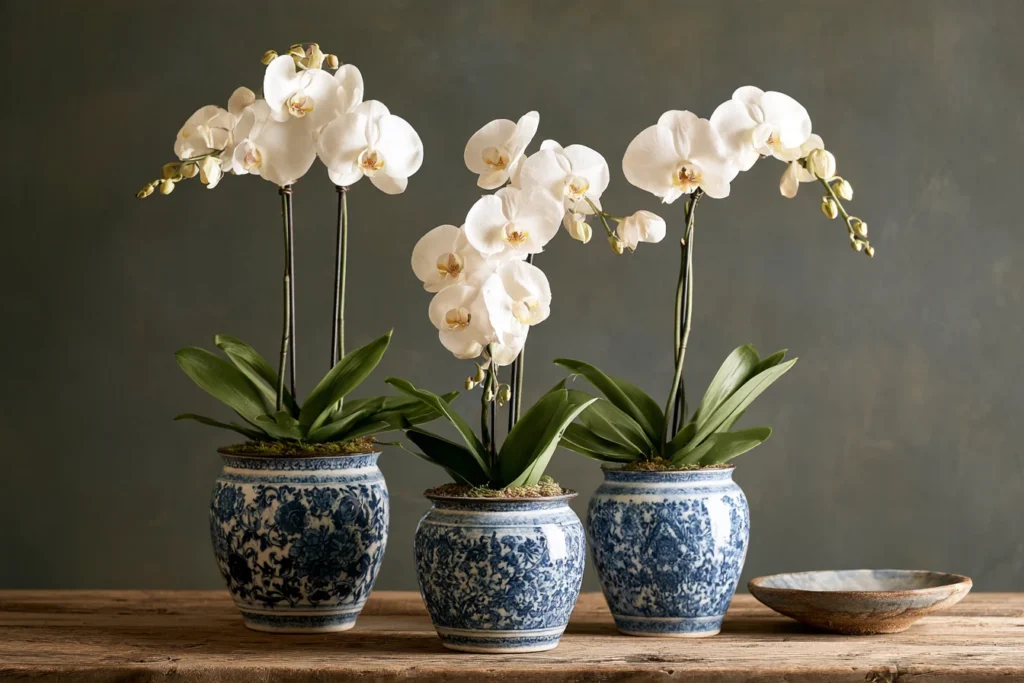
- The Cachepot Method: A clear nursery pot is highly practical, allowing you to observe root color and moisture levels before watering. Place this functional pot inside a more decorative bowl, tray, or basket, provided the outer vessel does not block drainage or trap water beneath the plant.
- Material Matters: Ceramic containers remain relatively cool and provide a stable base. Metal trays are usually better suited as accents or saucers. Wicker baskets require a protective liner that contains moisture without preventing drainage.
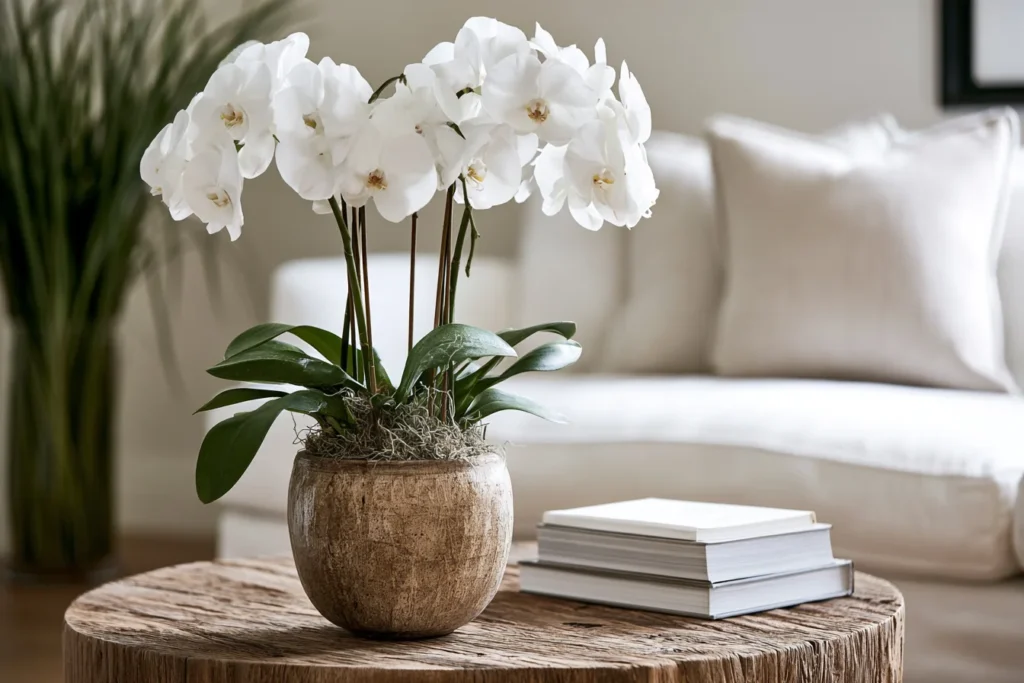
The central design principle is simple: a beautiful vessel should support, or safely conceal, a practical orchid setup.
Minimalist Ceramic Bowls for Modern Interiors
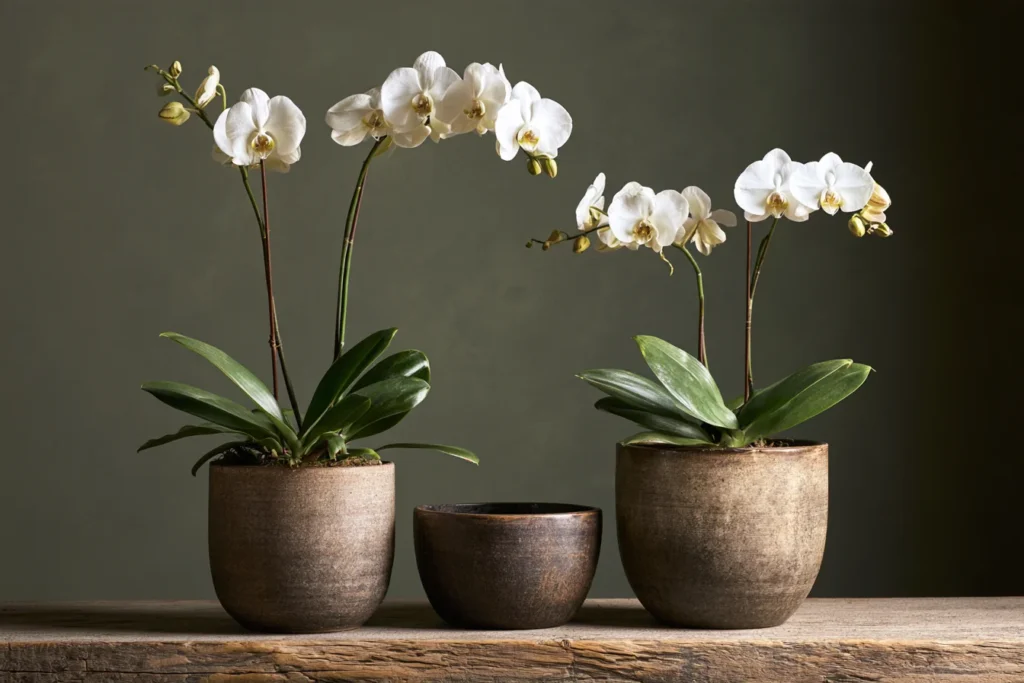
Minimalist ceramic bowls offer a strong way to connect orchid care with modern interior design. Their uncomplicated silhouettes work naturally in contemporary, Scandinavian, and Japandi rooms where visual calm matters.


- Finish and Color: A matte finish or lightly glazed surface keeps reflection controlled, allowing the orchid’s arching stems and flowers to remain the focal point. Neutral shades such as white, cream, charcoal, sand, and muted gray create a quiet backdrop.
- Proportion: Low, wide bowls suit compact displays, particularly when the plant has modest leaves. Taller cylindrical forms visually reinforce upright stems, making them useful beside narrow shelving or consoles.
- Functionality: Many decorative ceramic bowls lack drainage, so they should function strictly as cachepots. Keep the orchid in a well-draining inner pot, then place it inside the bowl. After watering, remove the inner pot when practical and empty any collected water.
- Restrained Styling: Leave breathing space around the plant. Pair one orchid with natural wood or stone, and limit additional decorative objects so the minimalist effect remains clear.
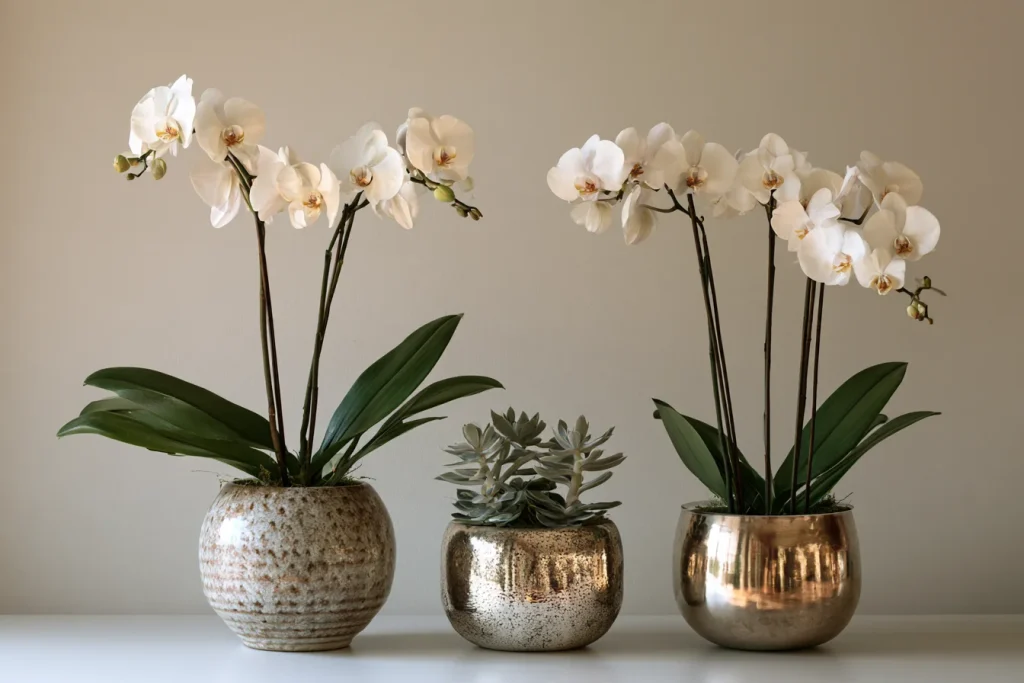
Vintage Silver Trays for a Polished Display
A vintage silver tray can give an orchid display polish, history, and a distinctly composed presence. It works especially well in traditional, transitional, and Art Deco rooms, where an orchid’s soft, sculptural form benefits from an architectural setting.


- Presentation Surface: The tray should function as a presentation surface, not as the planting vessel itself. Gather the nursery pot, a small cachepot, and perhaps one coordinated accessory on its reflective surface.
- Light and Patina: Silver catches ambient light and can enhance white, lavender, or pink orchid blooms. A naturally softened patina adds warmth and prevents the display from appearing excessively formal.
- Moisture Protection: Choose a tray with modest depth or raised edges to contain accidental drips. Place a waterproof liner, saucer, or sealed inner container beneath the pot to protect the metal and shield your furniture from moisture.
- Maintenance: Lift the pot periodically to dry both the tray and its surroundings. Address tarnish gently according to the tray’s finish to preserve its character. Keep supporting details restrained to maintain elegance.
Rustic Wicker Baskets for Natural Textures
Rustic wicker baskets suit farmhouse, coastal, and bohemian interiors, where relaxed materials help an orchid feel integrated rather than overly formal. Their woven fibers soften the plant’s structured leaves while adding tactile contrast to wood, linen, and clay finishes.
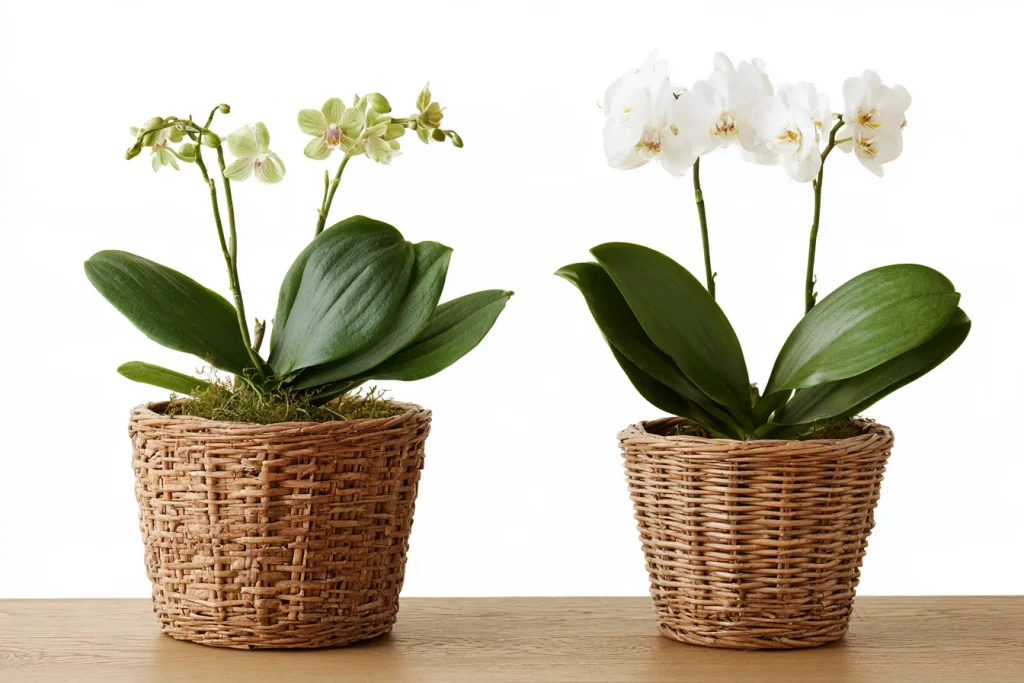
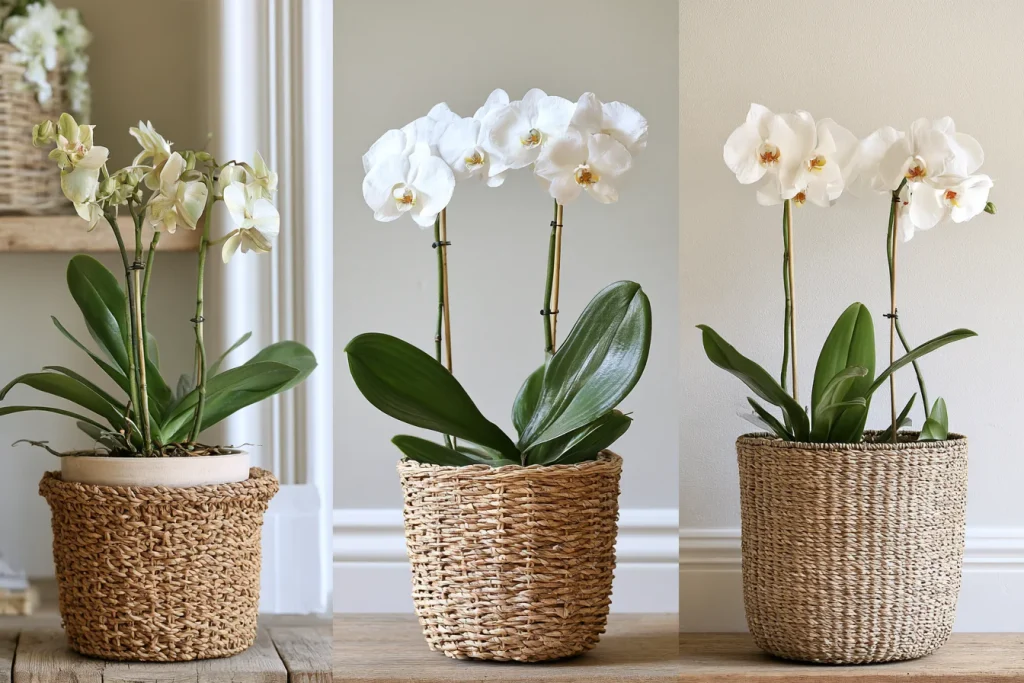
- Outer Cover Only: Wicker should almost always function as an outer cover, not as the orchid’s primary growing container. Woven fibers are porous and can deteriorate when repeatedly exposed to moisture.
- Waterproof Liners: Place a sealed cachepot inside the basket. When practical, remove the orchid from the basket before watering, allow excess moisture to drain fully, and return the plant only after the exterior of the pot is completely dry.
- Scale and Placement: A compact basket frames a small tabletop plant without overwhelming a shelf. Taller, tapered forms provide useful visual height for floor displays.
- Air Circulation: Maintain open circulation around the leaves and roots. Rotate the plant periodically so growth remains even and the display does not lean toward one direction.
Maintaining the Display
Regardless of the vessel you choose, regular maintenance is essential. Inspect the setup regularly for trapped moisture, wipe dust from ceramic and silver surfaces, and ensure the orchid receives suitable bright, indirect light. When appearance and growing requirements work together, the right vessel for orchids becomes a seamless part of both the plant-care routine and the wider character of the home.