The Ideal Orchid Placement Guide for Every Room in Your Home
Before deciding on the best spots for your orchids, assess the environmental conditions each room can provide. Most orchids thrive in bright, indirect light, stable warmth, moderate to high humidity, and gentle air circulation. They also require protection from drafts and sudden temperature changes. A visually attractive location may not be suitable if it exposes the plant to harsh sun, cold air, or inconsistent temperatures.
Core Environmental Requirements
- Light: This is the most critical factor. East-facing windows provide gentle morning light. South- or west-facing windows usually require a sheer curtain to reduce intense midday or afternoon rays. Keep the orchid several inches to a few feet from the glass.
- Temperature and Airflow: Avoid placing orchids directly beside heating vents, fireplaces, air-conditioning outlets, frequently opened exterior doors, or cold windows. Gentle circulation prevents stagnant air, but strong drafts can stress foliage and dry the plant unevenly.
- Humidity and Watering: Humidity affects moisture loss but does not replace careful watering. Always check the potting medium and inspect the roots before watering, rather than following a fixed room-based schedule. A well-draining medium dries at different rates depending on the room.
Room-by-Room Placement Guide
Bathrooms
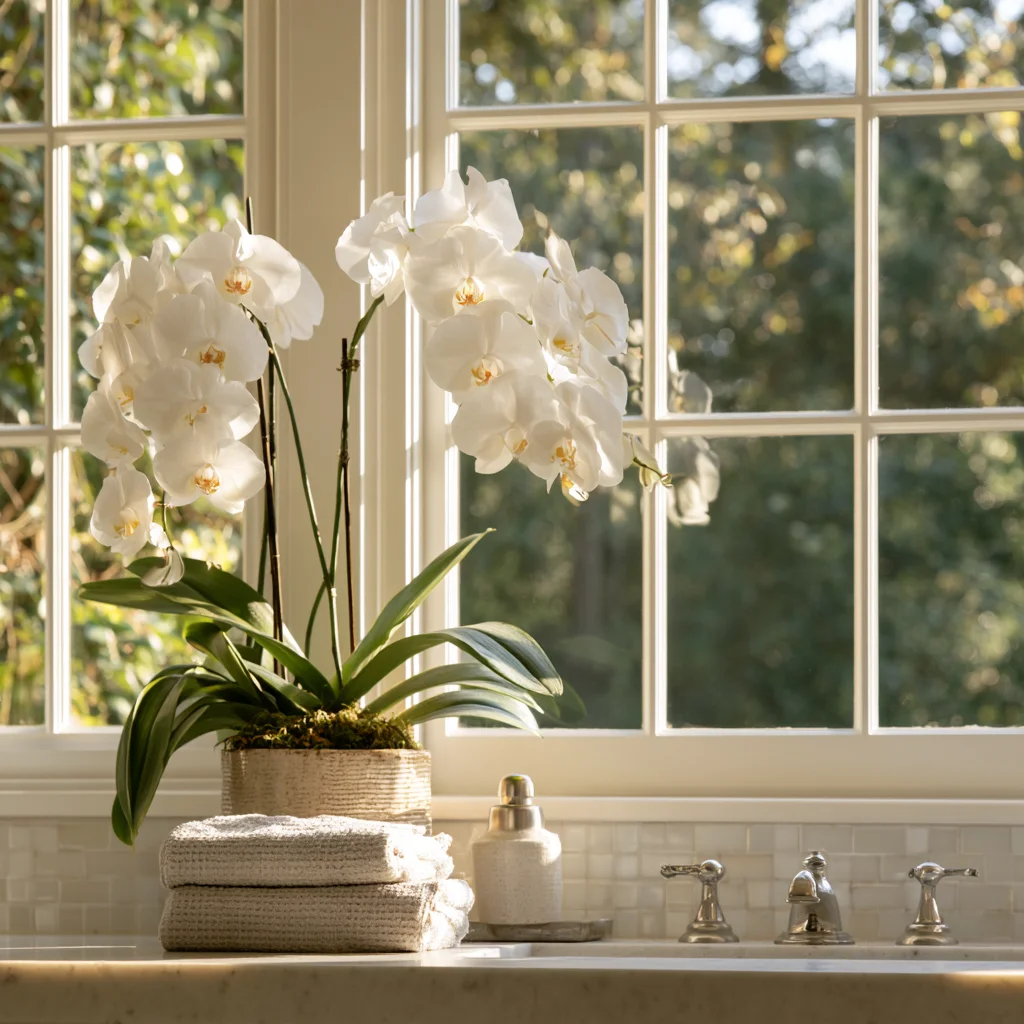
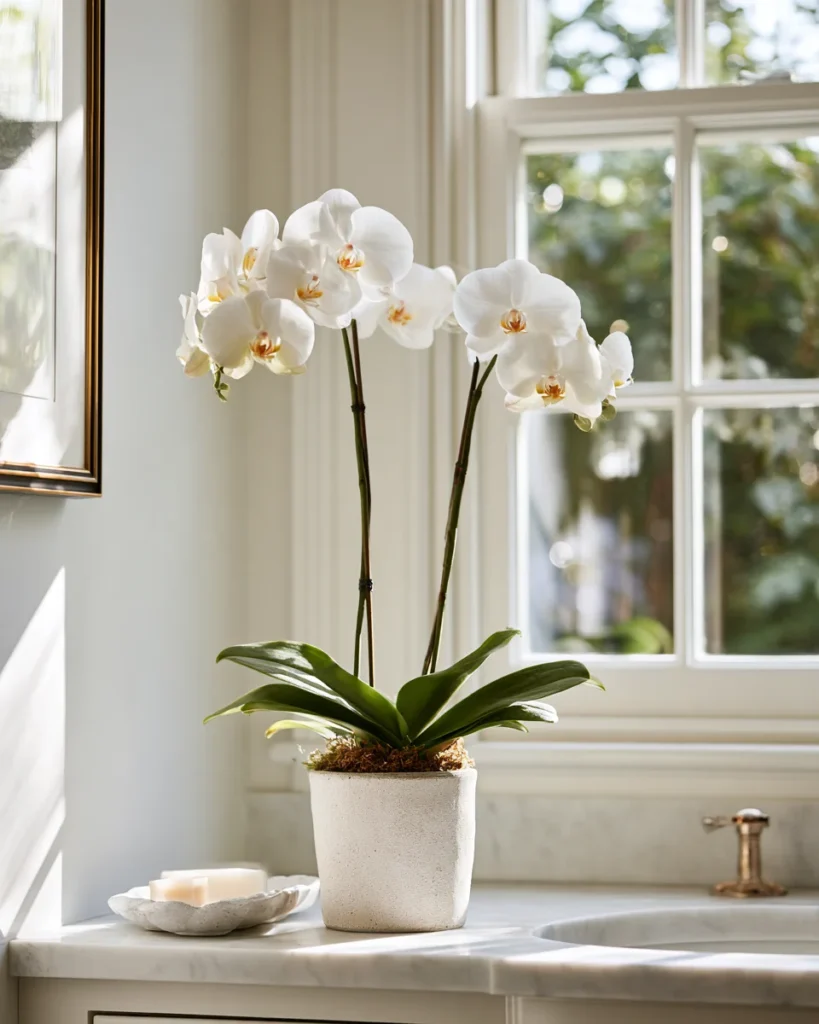
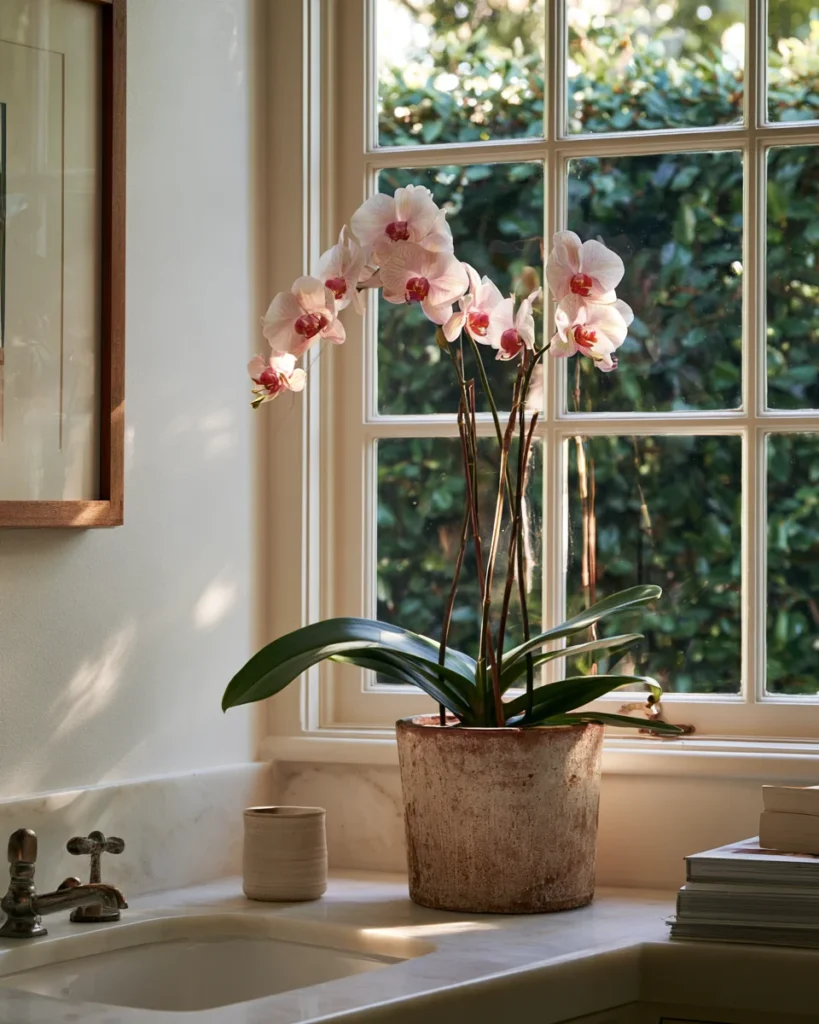
Bathrooms can be excellent spots when they combine natural light with moderate, consistent humidity. Steam from showers naturally raises moisture levels, which orchids appreciate.
- Ideal Spots: A vanity, shelf, or windowsill with adequate indirect light.
- Precautions: Keep the plant well away from direct water spray, soap residue, and areas exposed to sudden temperature changes.
- Warning: A windowless bathroom provides too little light for sustained growth. Lingering moisture without air circulation encourages fungal or bacterial problems. If the room lacks natural light, choose a different room.
Bedrooms
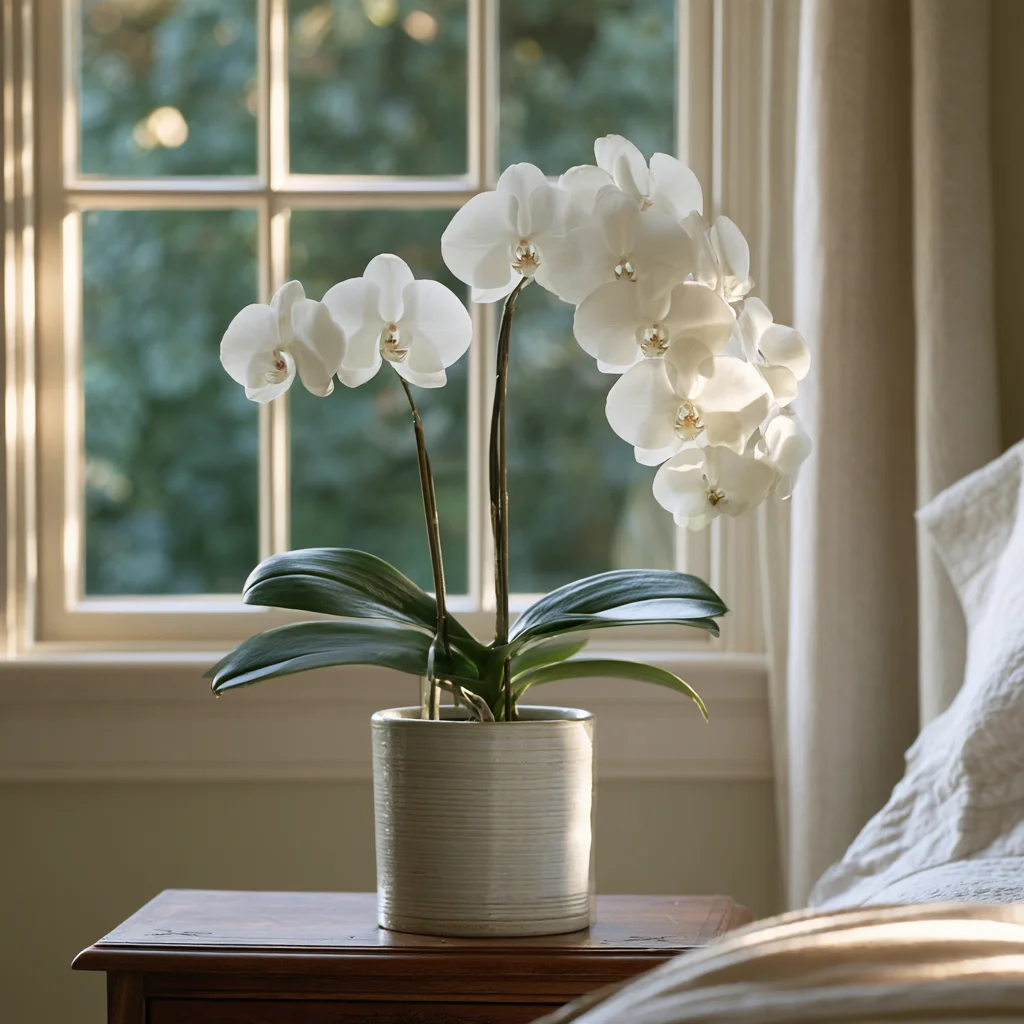
Bedrooms offer a calm setting with relatively stable temperatures, making them a highly reliable option.
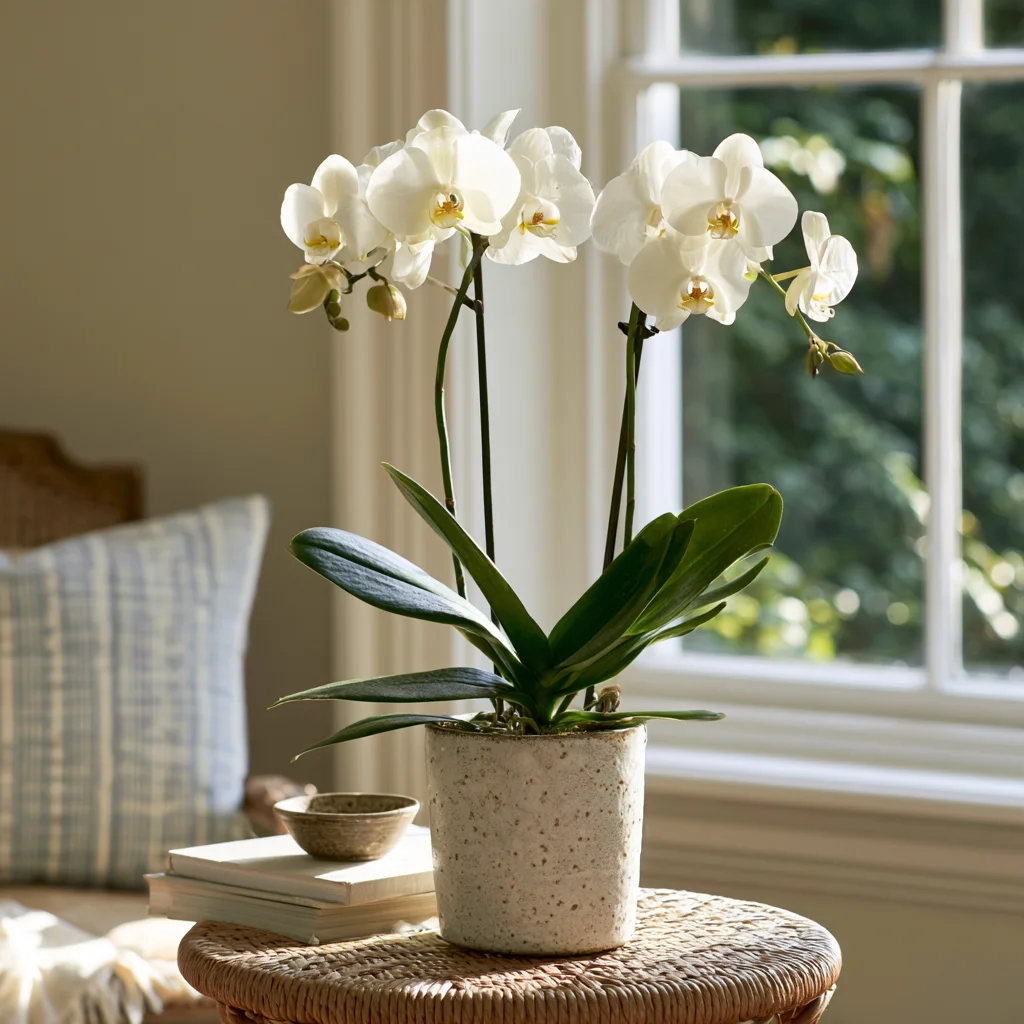
- Ideal Spots: Near an east-facing or bright north-facing window, or on a dresser where filtered light reaches the plant.
- Precautions: Keep orchids away from radiators, heating registers, fans, and drafty windows. Ensure the room does not become cold or fluctuate sharply.
- Pro Tip: Slightly cooler nighttime temperatures can support blooming, but ensure intense artificial light does not illuminate the plant all night. A regular dark period is beneficial for flower formation.
Living Rooms
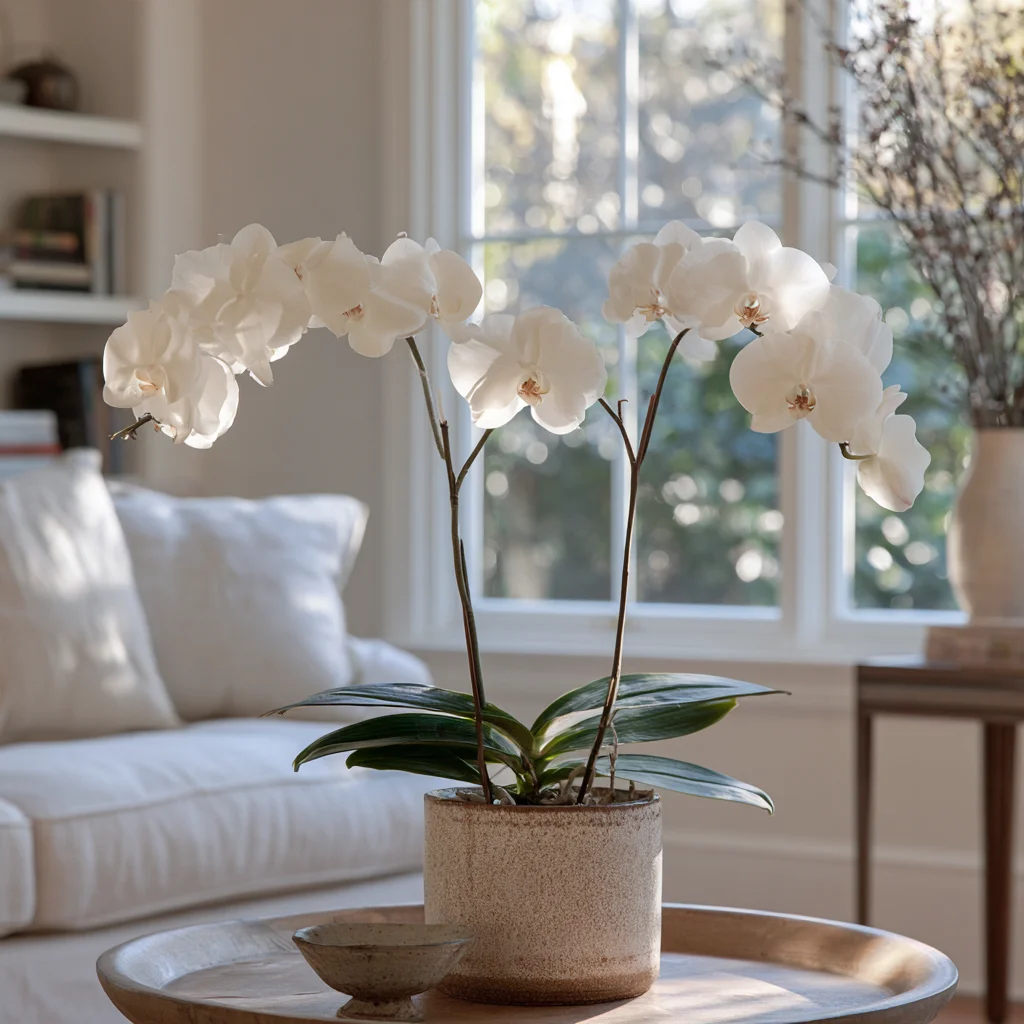
Living rooms often provide generous display space and multiple lighting options.
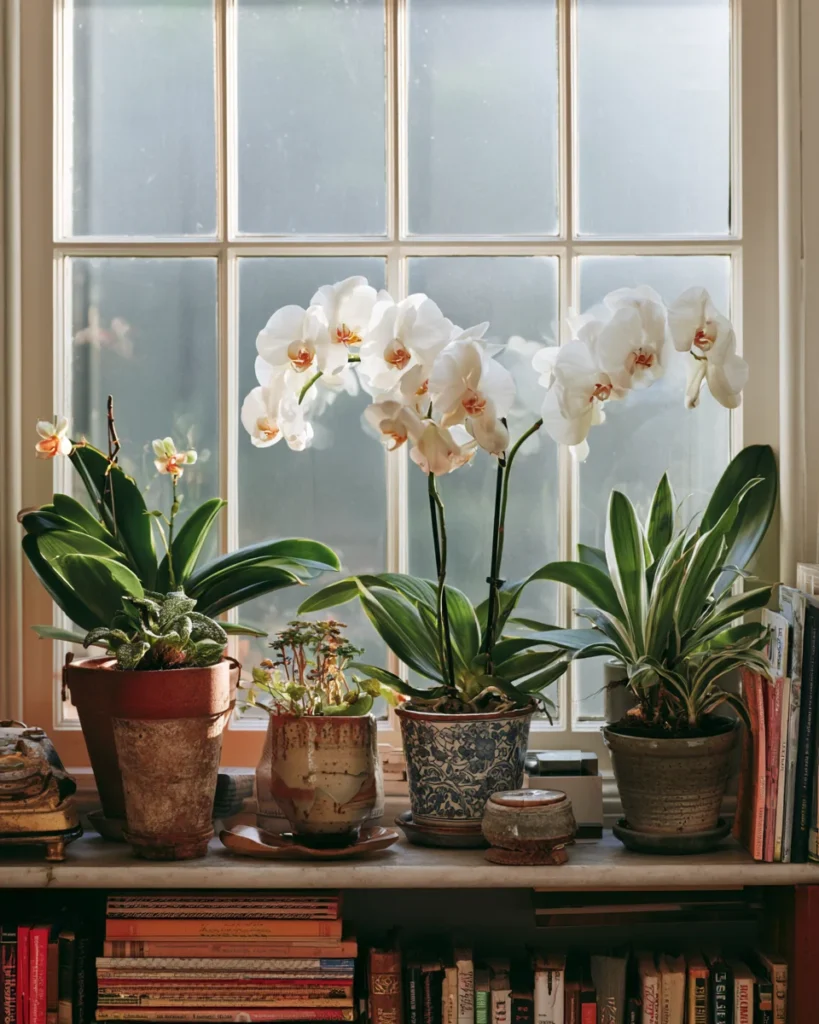
- Ideal Spots: A coffee table, plant stand, bookcase, or side table near a bright window.
- Precautions: Direct afternoon sun can scorch leaves. Use sheer curtains or position the plant a few feet away from the glass to ensure bright, indirect light throughout the day.
Kitchens
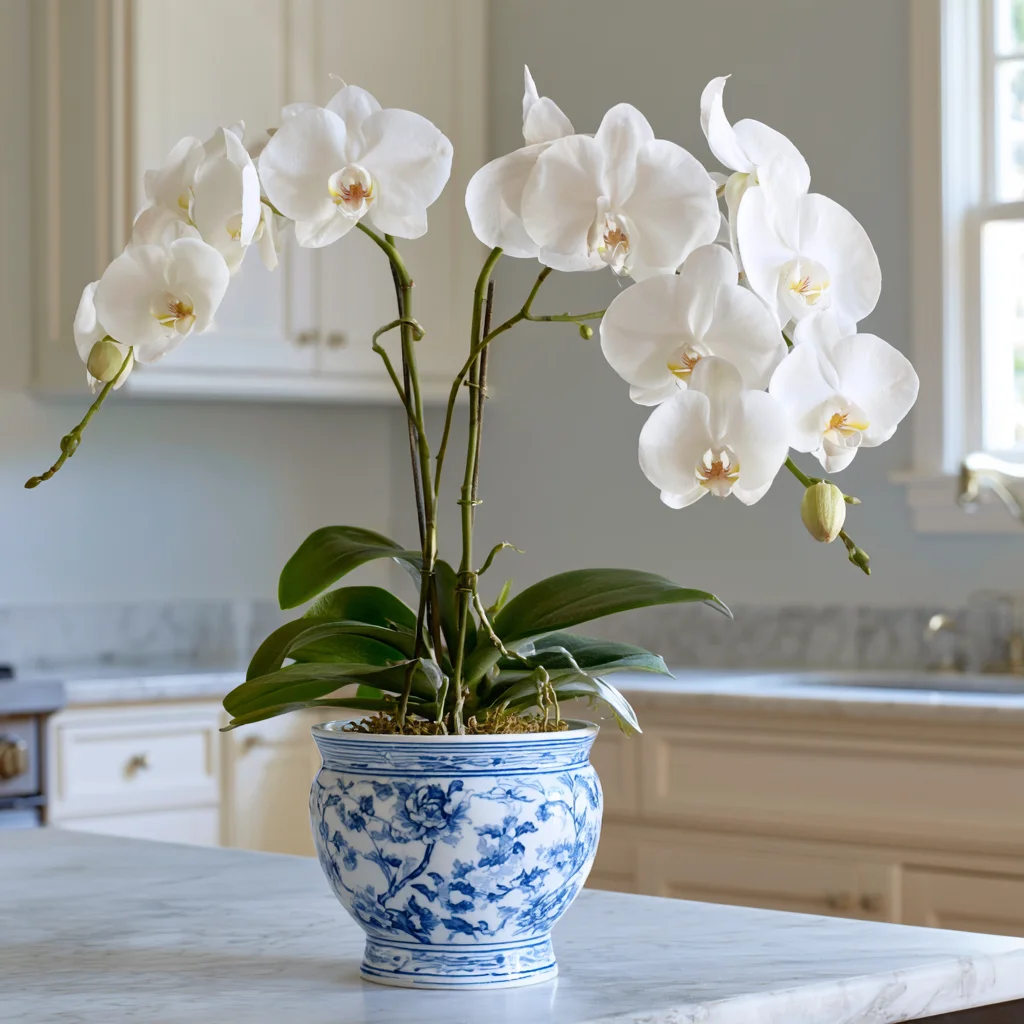
Kitchens offer warmth and humidity but also present significant environmental stressors.
- Ideal Spots: Near a bright window, well away from high-traffic cooking zones.
- Precautions: Keep plants away from the stove, oven, dishwasher steam, and sources of cooking heat, smoke, grease, and strong odors. Avoid fruit bowls (which attract pests) and frequently opened exterior doors where drafts can damage developing buds.
Dining Rooms
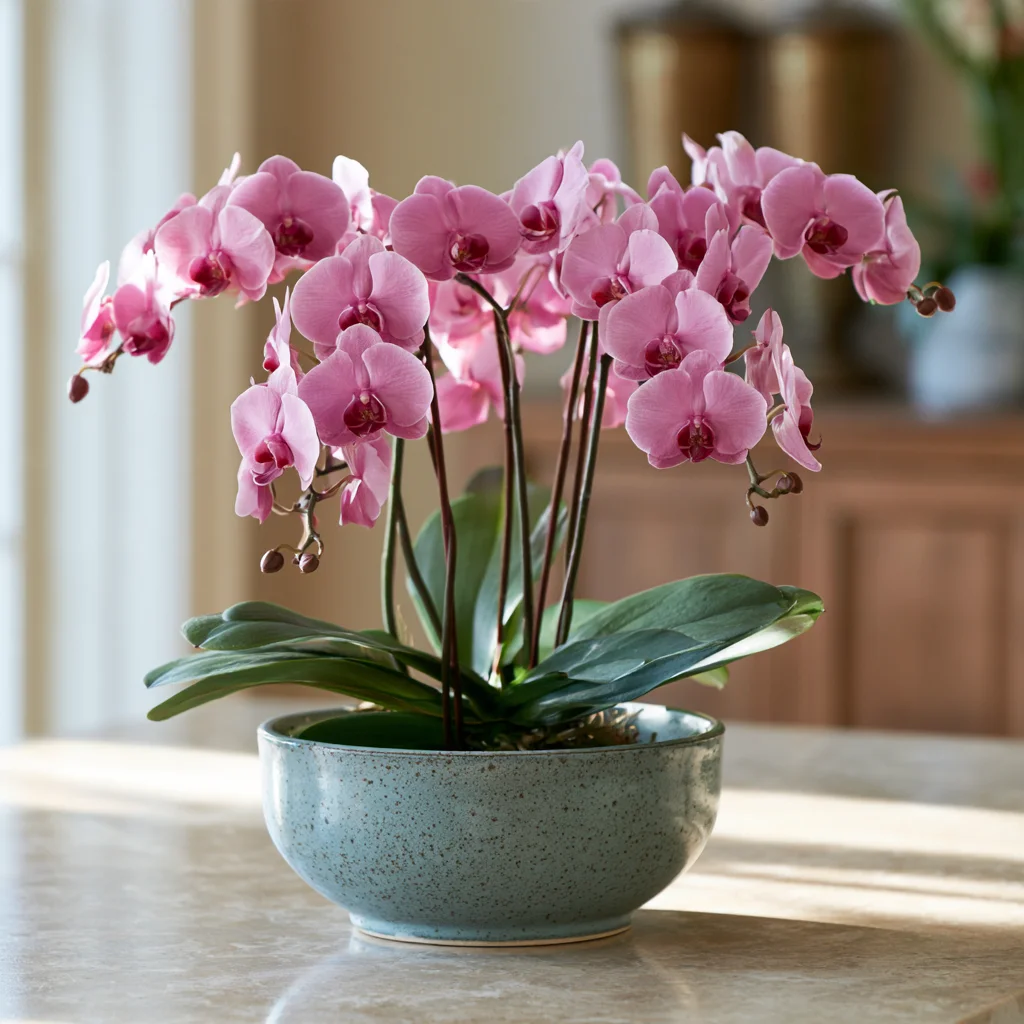
Dining rooms can be effective if the plant receives consistent indirect light and remains clear of table traffic.
- Ideal Spots: A sideboard, nearby plant stand, or well-lit shelf.
- Precautions: Avoid the center of a busy dining table or areas exposed to spills, serving dishes, or accidental bumps, especially when the orchid is flowering or forming new buds.
Home Offices and Reading Nooks
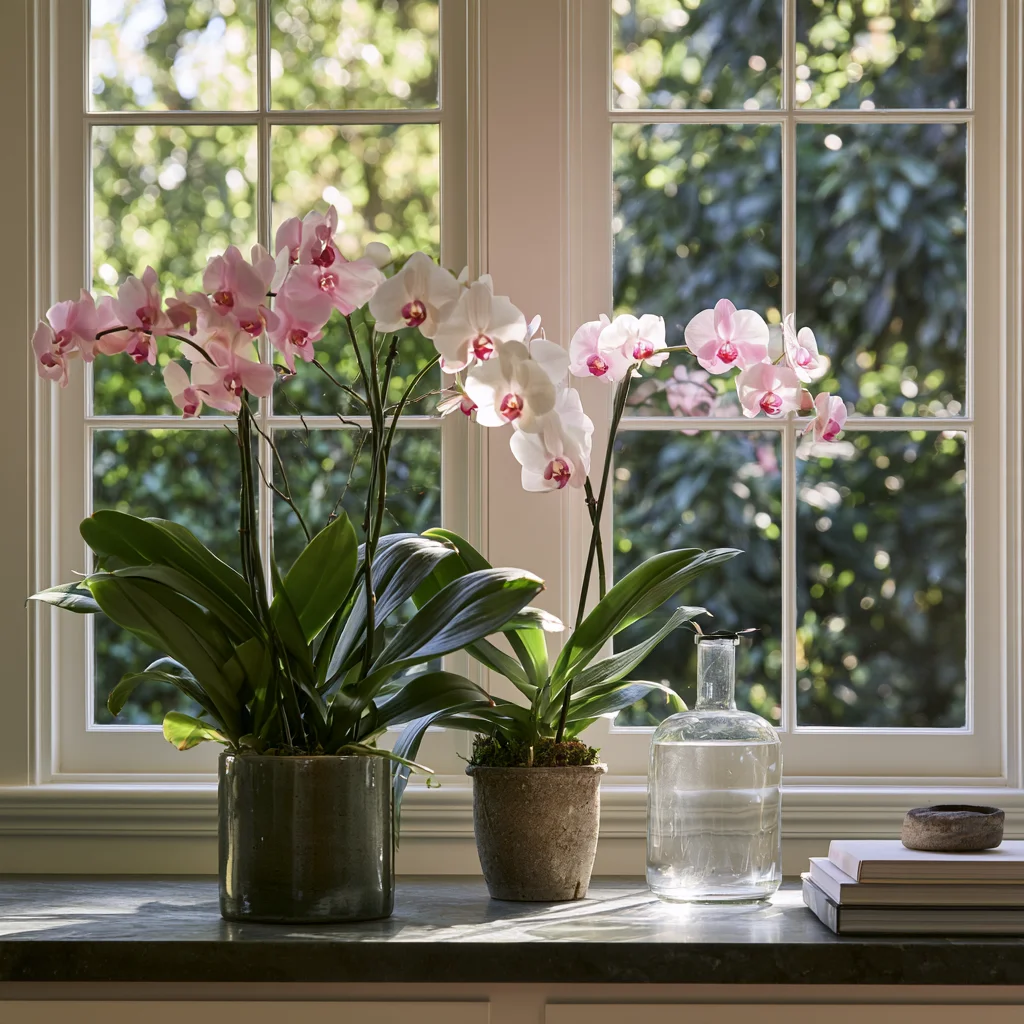
- Home Offices: These offer stable temperatures, provided the orchid is protected from computer heat, radiators, and vents. Keep it away from locations where leaves may be brushed by chairs or bags. A desk near suitable natural light is preferable to a dark shelf.
- Reading Nooks: Suitability depends on brightness, not just comfort. A shaded corner may work for shade-tolerant varieties, but most orchids will not bloom reliably in genuinely low light. If necessary, use a full-spectrum grow light on a timer, ensuring several hours of darkness each night.
Hallways and Decorative Shelves
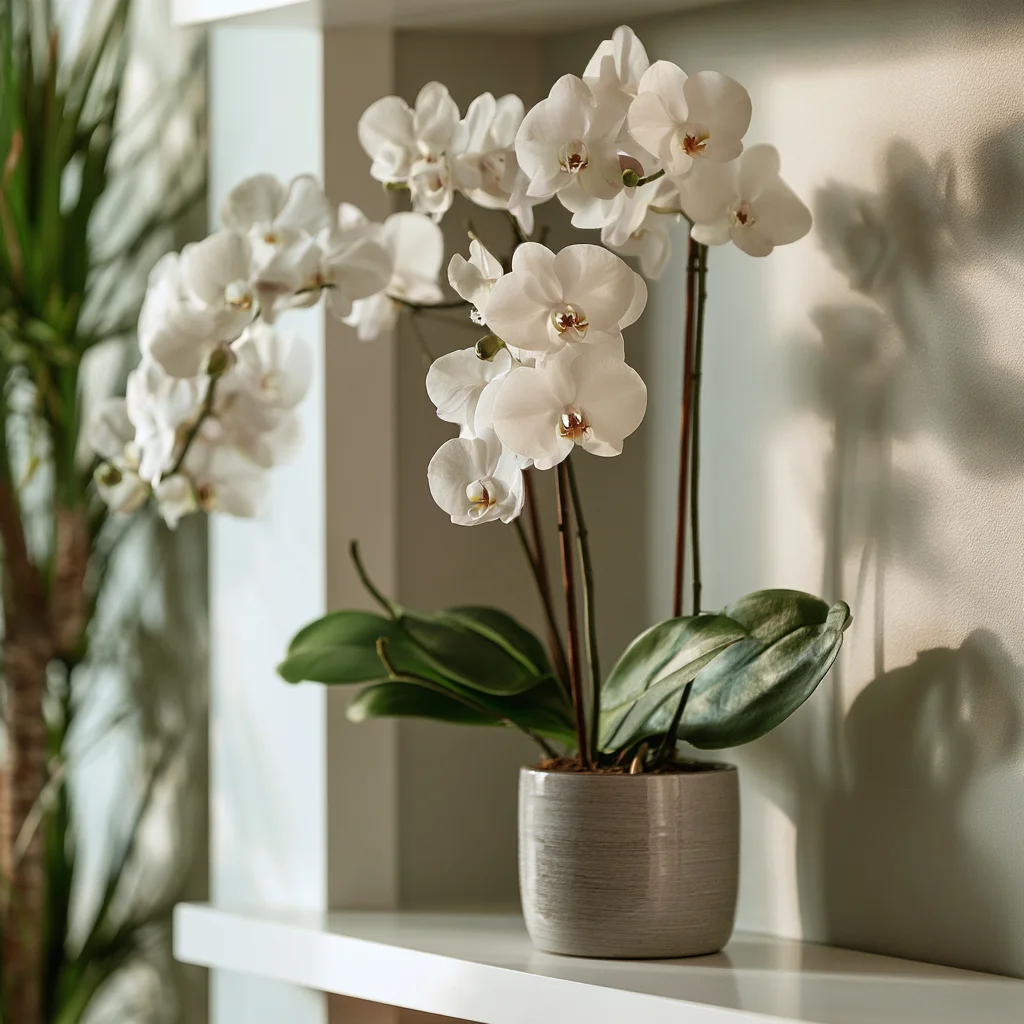
These areas require particular caution. Narrow passageways and dark corridors expose plants to bumps, drafts, or neglect.
- Precautions: Choose a position with adequate airflow, secure support, and enough space to water and inspect the roots. Avoid placing an orchid above electronics, near doors with strong temperature changes, or where dripping water could damage furnishings.
Reading Your Orchid’s Signals
Observe the plant to determine whether its placement is working. Stable conditions are usually more valuable than repeatedly pursuing a more attractive display position.
- Signs of Health: Healthy green leaves, firm roots, gradual new growth, and long-lasting flowers.
- Signs of Stress: Yellowing leaves may signal excessive light. Dark, limp foliage can reflect poor conditions or stress. Stretched, leggy growth commonly indicates insufficient light.
- Handling: Rotate the orchid only gradually so it adapts without sudden changes, and avoid frequent relocation while it is forming buds.
The Placement Checklist
Before finalizing a spot, run through this quick assessment:
- Assess light intensity first.
- Check humidity and temperature stability.
- Ensure gentle airflow without harsh drafts.
- Verify easy access for watering and root inspection.
- Confirm protection from pets, children, vents, and household traffic.
Seasonal Adjustments: Reconsider placement seasonally as sunlight angles change and indoor heating dries the air. Moving an orchid slightly closer to a window in winter, or farther from harsh summer rays, can preserve healthy leaves and encourage consistent flowering.